Transformative Change

Twentieth Sunday Scripture Readings
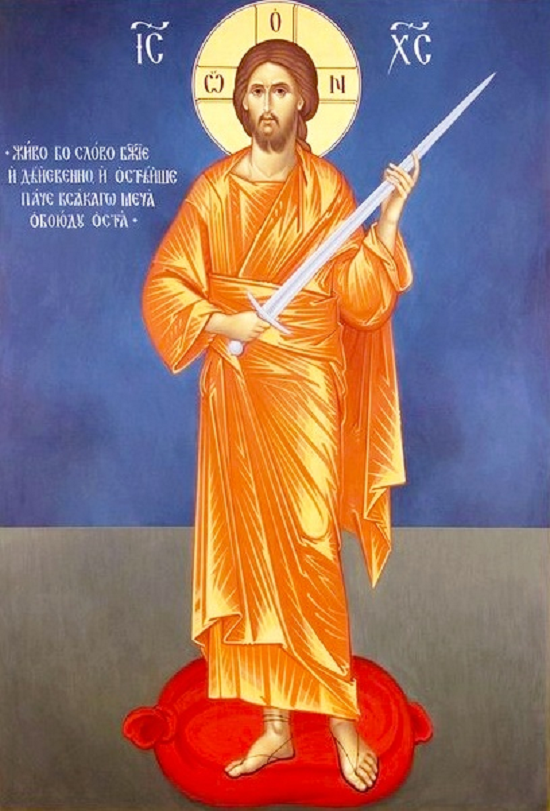
When Jesus says that he came not to bring peace but division, he’s not talking about the peace that the world cannot give. He’s talking about the peace of complacency, the peace of the status quo. Likewise, the division he speaks of is not the sword of war, but that necessary division that separates the wheat from the chaff, the sheep from the goats. In fact, everything in the gospel today speaks of radical transformation. The fire Jesus refers to is not the fire of hell or judgment, but the fire of purification, freeing the old and worn-out to become something new. The baptism he talks about isn’t merely a ritual bath, but the descent into the waters of death and destruction—that is, the cross—and the ascent into rebirth and renewal—that is, the resurrection.
We may think of Christianity and, especially, the Church as steeped in tradition, as indeed it is. And yet, transformative change is at the heart of Christ’s message. There are two kinds of change that are radically different from one another: incremental change and quantum change. Incremental change, as the name suggests, is gradual, like raising or lowering sound volume or dimming or brightening light. We could call it analog change, because the difference between the beginning and ending points is simply a matter of degree. The problem with incremental change is that things can easily revert to how they were before.
Quantum change is more permanent. It’s like changing the channel or turning on or off the light. We might think of it as binary—either one thing or another. There’s no middle ground. We can’t simultaneously receive some of one broadcast channel and part of another. Unlike incremental change, quantum change necessarily involves division and loss. In quantum change, we can’t say hello to a new reality until we’ve said goodbye to the old. From the beginning of time, we humans have tried to embrace a new way of thinking or a new way of being while maintaining an attachment to our old ways. We’ve tried, but we’ve failed. Quantum change has consequences. The difficulty we have with change is never about embracing the new. It’s really all about abandoning the old. That abandonment is riddled with fear—the fear of losing something essential with no guarantee of its replacement. It’s that fear that holds us back from moving forward in all aspects of life.
The fire that Jesus mentions is the fire that consumes what is to make way for what is to come. Fire can be painful, just as it’s painful to lose anything we’re used to, or attached to, or love. Yet, the coming of Christ challenged the world to abandon the foolishness of wealth, power, and prestige and to embrace the wisdom of a trust in God anchored in God’s promise to love and care for us.
That baptism that Jesus longed for is the passage from the life we’re accustomed to, through death to the familiar and comfortable, into the sure hope of the resurrection, even without knowing exactly what that means. Death is the perfect instrument of quantum change. It requires abandonment of everything we were and had, while what we will be remains vague and uncertain. When we embark on something new and entirely different, we never know exactly what we’re getting into until we’re actually in it. In the case of our baptism into the death and resurrection of Christ, we not only have God’s promise, but we have Jesus’s example. Christ has died; Christ is risen; Christ will come again.
That reminds me of a well-known saying from the Big Book of Alcoholics Anonymous that goes, “Some of us tried to hold onto our old ideas, but the result was nil until we let go absolutely.” [Alcoholics Anonymous (Fourth Edition), page 58] That’s the quantum change we’re talking about this morning. That’s what Jesus was telling his disciples, and us. When we try to hold onto our old lives, the result is, and always will be, nil—not a little, not somewhat, not partially, but nil. The results of incremental change are nil. We’re called to choose quantum change and let go absolutely and unconditionally. What are we to let go of? Nothing less than our old lives, our old ways of thinking, and our old behaviors.
There is the division that Jesus is telling us about. It’s a personal decision to let go and let God. That decision to become new, to live our baptism every day, can’t be taught, can’t be done to us or for us. Neither can we do it to or for anyone else, especially our family or loved ones. We can’t proselytize or convince someone else to step away from an old way of life that offers them a kind of safety and security… but at a price. The way of the cross, the way of the follower of Christ, offers a sense of neither safety nor security. Therefore, whenever we make the commitment to embrace quantum change, we will, as the gospel points out, leave at least some loved ones behind. At the same time, we need to be aware that, when we openly take that kind of risk—the risk of quantum change—and survive, we challenge others to confront their own complacency, and that can be scary. That’s why loved ones may put roadblocks in our way, not because they’re afraid we might fail, but because they’re afraid we might succeed.
Crossing the line between our old life of futility and death and the new life of promise takes courage. That’s why so relatively few make that choice. Yet, there’s one word in today’s second reading that can be a source of inspiration and encouragement to us as we take that step daily. The author of the Letter to the Hebrews writes that Jesus is the “leader and perfecter of faith.” In Greek, what we have as the word “leader” is αρχηγος (archēgos), meaning pathfinder, or pioneer, the trailblazer who goes ahead so that others may follow after. Jesus not only demands nothing of his followers that he himself has not already done, he also shows us the way. As pioneer, through his death and resurrection two thousand years ago, which divided the new life of faith from the old life of futility, he still today blazes that trail for us each time we must abandon the certainty of the old to embrace the uncertainty of the new. The mystery of his death and resurrection remains not only a potent force for change in history but also works as the dividing force between the new and the old for us whenever we encounter the need to change. Remember that, as with Jesus, so with us, when God calls us to embrace a new life of faith, the result will be nil unless we let go of the futility of the past absolutely.
Get articles from H. Les Brown delivered to your email inbox