
Way, Truth, and Life

Fifth Sunday of Easter Scripture Readings
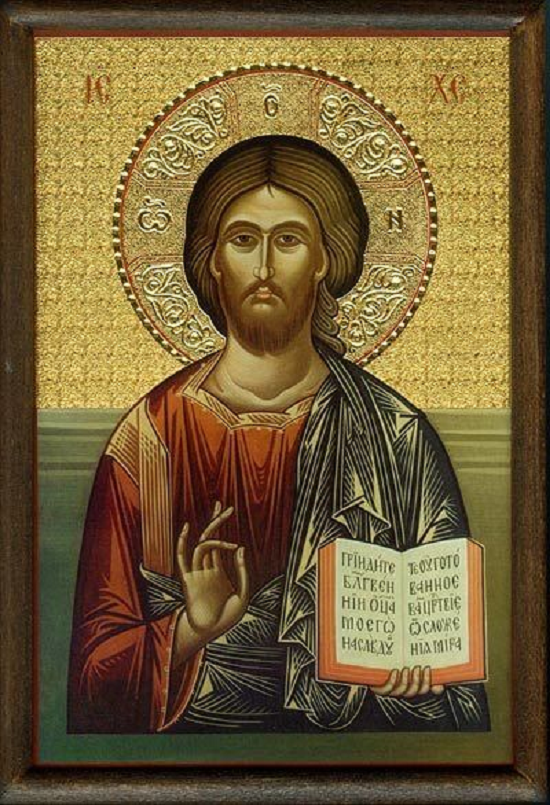
Today’s gospel reading, and next week’s as well, seem like throwbacks. Here we are, five weeks past the resurrection, and suddenly we find ourselves back at the last supper narrative from John’s Gospel. Yet, once we realize what Jesus was doing for his disciples at that meal, it makes perfect sense. The disciples are upset and frightened. People outside are seeking the master’s life, and he’s just told them that he’s leaving them and going where they cannot come. Even more so, he’s told them that they’ll betray and abandon him. They feel their world being shaken to its foundations. Jesus provides them here the structure they will use later on to make sense of it all. So, here we are, looking back to that moment from the empty tomb and the breaking of the bread to look at what he provided them with from this new perspective.
Here is the architecture of faith, the architecture of Church. The temple was not far from the upper room. It dominated not only the city of Jerusalem but also the consciousness of its inhabitants. The Holy of Holies contained the glory of God—God’s shekinah. It was God’s house, and the only place on earth where God could be properly worshipped. The Samaritans were heretics. They worshipped somewhere else. And the pagans? Well, the less said about them the better. Yet even the disciples knew that when the High Priest entered the Holy of Holies, he did not meet God face-to-face as Moses had. So Philip, hearing that Jesus had seen the Father asked it for himself: “Master, show us the Father, and that will be enough for us.”
What Jesus responded with laid the foundations of an understanding that broke their whole understanding of God’s relationship with his people wide open. “In my Father’s house… in God’s home… there are many dwelling places.” There are many persons in whom the Spirit of God resides. God’s home, after all, is the universe which he created. In that home are many dwellings—not just the Jerusalem temple, not just Mount Gerizim, but in the person of Jesus and of everyone who lives and loves as he did. Jesus and his disciples like us and those who show the world God’s loving kindness and mercy, they—really, we—are the dwelling-place and temples of God. “Do not let your hearts be troubled,” Jesus tells his followers. For Jesus, the heart wasn’t just all emotion, it was the center of discernment and commitment. He’s telling them not to be confused by appearances but to look again and see the presence of God all around and within. God’s not out there somewhere, He’s telling them. God’s right here if you’ll only look for him.
Jesus tells his disciples, “I am the way, the truth and the life.” Here’s another time when we realize how shallow translation can be. It’s not about substituting a word in one language for the same one in another. Translation means substituting one world of meaning for another. We’re looking at Jesus’s words through our Germanic rigidity imposed upon a Greek interpretation of a Hebrew understanding. Take “the way” for example. For us, it’s the route we follow to get somewhere. In Greco-Roman, it’s the method of achieving something. In Hebrew, it’s the pavement itself. To walk in the way of the Lord is to follow the concrete, set, established path. It means, figuratively, to live the life of the covenant correctly, observing its stipulations. When Jesus says, “I am the way,” using the “I am” from Sinai, he is saying that the way of Yahweh is a person, a relationship, an encounter. When you encounter Jesus, you encounter the way of God’s love.
Likewise, truth. For us, the truth is what’s empirically provable. That’s fine for our roots, but the Greeks saw truth as what was evident—not hidden—and the Romans followed suit. Remember Pilate’s, “What is truth?” Not so for the Hebrews. Truth, אֶמֶת (emeth), is related to the word meaning “it is solid.” “It is firm.” “It is established.” From it we get our word “amen.” Jesus says, “I am the truth.” That has nothing to do with doctrine, and everything to do with the foundation upon which the dwelling of the Lord is built. The temple of the Lord is built on the foundation of a person who is trustworthy. Our hearts are not to be troubled because life in the spirit rests on an unshakable foundation.
Finally, the life. For us, life is a biological phenomenon. For the Greco-Romans, life was the journey from birth to death, determined by choices and intervening forces along the way. For the Hebrews, life, חַיִּים (chayyim), was the result of the breath of God. It’s plural—not because there are many lives, but because life itself is too abundant to fit into one. It’s the plural of abundance. It’s that, and fullness of vitality. The life that Jesus identifies with the life he offers to his followers is not a life without hardship or pain. His passion, death, and resurrection were proof of that. But notice that we say that his death revealed the resurrection. That’s because the life of unreserved abundance was always there and was only revealed when the superficial was stripped away. Life is not biological, it’s not philosophical, it’s personal.
And that is what Easter has done: it has gotten rid of all the stuff that so concerned us and laid bare what really matters. It also allows us to understand what Jesus was saying to his disciples that Holy Thursday evening. He told them, “The Father who dwells in me is doing his works.” Not dwelling in the heavens, not dwelling in the Holy of Holies, not dwelling “out there,” but in me. And he goes farther. “Whoever believes in me will do the works that I do.” Why? How can that be? It’s because the Father who dwells in Jesus dwells in us, too. The curtain in the temple has been torn in two from top to bottom. Jesus has told us—no, he has shown us—that the God we kept looking for out there has been in here the whole time. And the grace—the love of Christ that we’ve embraced now lives and works in and through us.
Are we ready to admit it? Are we ready to say it out loud? Not because we are equal to him, but because his Spirit lives in us, can we dare to speak in his voice? Can we say, I am the way? Walk with me and we’ll walk together with God. I am the truth? Not a set of laws or doctrines but a foundation of love and trust in God that you can rely on. I am the life? I am a fountain of vitality and abundance that wells up from the Father within me and which I want to share with you. Are we ready to say, “Look at me. Whoever has seen me has seen the Father”?
Get articles from H. Les Brown delivered to your email inbox