God and Mammon

Twenty-Fifth Sunday Scripture Readings
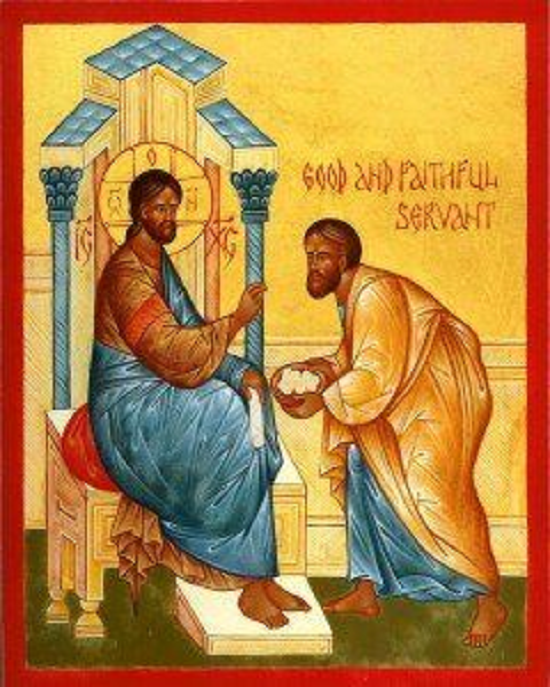
Well, here we go, right? Today’s readings ask us to reflect on one aspect of the “unholy trinity” of wealth, power, and prestige, and to consider the attitudes we, God’s faithful people, might have concerning wealth and property. Jesus tells his disciples a parable about a property manager. At first reading, it might appear that the master is praising his servant for squandering even more of his wealth in the form of the goods owed to him. However, this doesn’t make sense until we realize that property managers of that time, like tax collectors then and investment managers now, were allowed to add additional fees for their services and interest onto their transactions. In this case, it seems that the manager was handling property let out to tenant farmers—tenders of olive orchards, and growers of wheat—who owed the master—the property owner—a portion of their crop in payment…plus, of course, the fees added to them by the manager. Perhaps we might say that the manager was less “dishonest” than he was greedy, risking the master’s income by charging his tenants exorbitant sums. The master fired him for being reckless with his property and its income.
What the servant did in response to his dismissal was to backtrack and cancel that part of the tenant’s debt that he himself had added onto it as fees and interest. He chose to let go of the wealth that he’d coveted and hoped to obtain. Why? To obtain a kind of security that the wealth he sought couldn’t provide. That’s why the master was praising him. It was because he had a change of heart and chose the security of solid relationships over personal financial gain.
Jesus acknowledges that the secular world—the world of practicality—manages itself more effectively than the spiritual world—those who focus on the bigger questions of life. There always seems to be a tension between the real and the ideal, the secular and the spiritual. Some people get so bogged down with practical issues of wealth, power, and prestige that they lose sight of the bigger picture, imagining that the “unholy trinity” will save them. That’s what the gospel means when it says, “You cannot serve both God and mammon.” Mammon literally means that in which one puts his trust. Mammon, then, is anything that’s not God. On the other end of the spectrum are those who get so lost in the ether of what could be that they become detached from what already is. Jesus counsels his disciples not to belong to either camp when he says, “Make friends for yourselves with dishonest wealth.”
What makes wealth “dishonest”? That’s what the servant in today’s parable discovered. Wealth cannot deliver on what it promises. It, along with power and prestige, promises security, fulfillment of our needs, and control over the forces of time. It’s a dishonest promise because it only appears from the outside to deliver these things, whereas, on the inside, the wealthy, powerful, and prestigious are even more insecure, unfulfilled, and at the mercy of forces beyond their control than others.
What does Jesus mean by being “trustworthy”? It means being realistic, and being realistic implies basic honesty. In fact, my favorite definition of spirituality is “having an honest relationship with reality.” Think about it: if we pay proper attention to the details of life, the big issues more or less take care of themselves. However, if we’re negligent about small matters, before long, we’re caught in an error cascade that sends life into a tailspin.
So, what’s Jesus’s formula for success? I’d call it practical diligence. It means paying attention to the details of living, including even wealth, property, and prestige, properly understood. They’re both necessary and useful, so long as we’re wise enough not to put our trust in them. Our focus and foundation must lie elsewhere—in our connection with God, our reliance on him, and our service of others. Without that ground in spiritual reality, we place ourselves at the mercy of the storms of fate. When Jesus says, “Make friends for yourselves with dishonest wealth,” he also says, “so that when it fails, you will be welcomed into eternal dwellings.” This, as Christians, is our balancing act—to live in the world, but not of it, to use the things of the world—its wealth, power, and prestige, which pass in and out of our lives—while not becoming dependent on them or asking them to give us more than they’re capable of providing.
Suppose we’d ever doubt the truth of Jesus’s teachings. In that case, we need only look at the devastation all around us inflicted on institutions, families, and individuals by those whose lives are defined by the mammon of wealth, power, and prestige. It’s a devastation they and their followers will not escape. As the Prophet Amos spoke: “The Lord has sworn by the pride of Jacob: Never will I forget a thing they have done.”
Get articles from H. Les Brown delivered to your email inbox