
Out of Unconsciousness

Thirtieth Sunday Scripture Readings
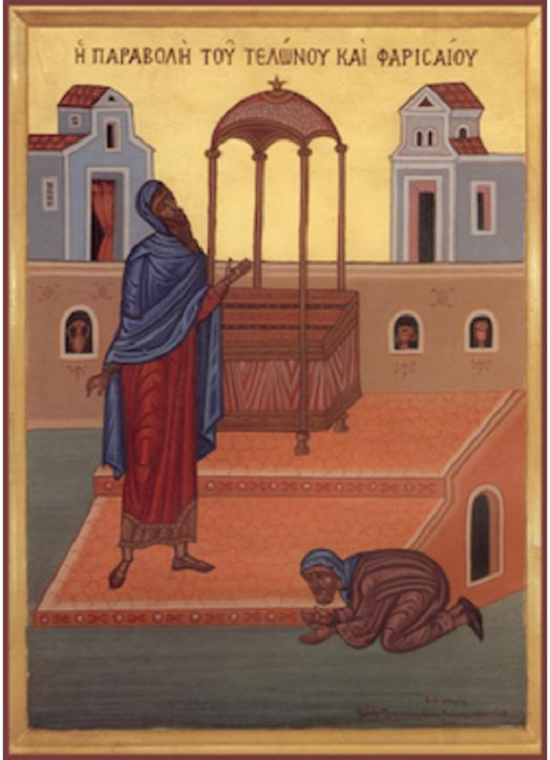
It’s so easy to drift along in unconsciousness. In fact, it takes no effort at all. Unconsciousness is a natural byproduct of such normal human activities as forming habits, rote learning, memorizing, following rules, and making assumptions. It’s much easier to glide through life doing things the way we’ve always done them than having our routines disrupted by change, isn’t it? Yet, the Scripture readings provided for us in today’s liturgy give us fair warning that merely doing the right thing is never enough for those who would be spiritually awake and conscious.
Let’s start our pilgrimage through today’s Scripture readings with the psalm response, for a change. We find the psalmist contrasting God’s two groups of people and God’s relationship to each. On one side, we find what the psalmist calls God’s “servants.” These are those he refers to as “the lowly,” “the just,” “the brokenhearted,” “those crushed in spirit,” and those who take refuge in the Lord. On the other side, we’re told that God confronts “evildoers” and wipes remembrance of them from the earth.
Now, turning to our first reading, we find echoes of the same understanding. Ben Sirach writes that the Lord “hears the cry of the oppressed,” he listens to “the wail of the orphan,” and the complaint of the widow. It’s the prayer of “the lowly” that “pierces the clouds” to reach the ears of the Lord. In our unconscious state, when we hear these things, we naturally assume that they’re contrasting good people with bad people. But do we understand it correctly? In fact, what’s so “good” about being lowly, brokenhearted, crushed in spirit, oppressed, or abandoned?
Isn’t this also the understanding we carry across with us into our gospel reading? Doesn’t it seem as if Jesus is contrasting the “good” tax collector with the “bad” Pharisee? However, when we shine the light of understanding on this parable, we begin to see nothing of the sort. Where do we get the idea that the Pharisee is a bad person? Jesus never suggested that. In fact, we should assume the opposite. The Pharisee has gone to great lengths to be a good person. He strives for generosity, honesty, and chastity. He’s rigorously faithful to the Pharisees’ practice of fasting from everything, even water, all day, every Monday and Thursday. He gives fully one-tenth of his entire income to the temple. If we were to find a fault in him, it would be that he’s a bit too boastful about his fidelity not just to the Law of Moses, but also to his spiritual practices.
And what about the tax collector? We may assume that he’s the good person in this scenario. But is he? Tax collectors were, in a sense, traitors to their nation. Like collaborators in the Second World War, they sold out to the Roman authorities for personal gain. What’s more, they weren’t known for their honesty. They could become quite wealthy by overcharging those from whom they collected taxes. They were allowed to make a certain percentage of profit from their work, but many times they gouged the taxpayers. Rather than assume he was a good person, we’d do better to think of our tax collector as a cowardly, greedy, and dishonest fellow.
Evidently, the contrast Jesus is drawing between these two men is not about their being good or bad people. If it’s not that, what distinction is Jesus drawing here? As you consider this scenario, you might ask yourself what the real, deeper difference between the characters of these two men might be. Give up? Consider this. The Pharisee imagined that he was justified in the sight of God because of his good behavior. He was a follower not only of the letter of the Law of Moses, but the spirit as well. He was surely justified before the Law. He believed that this gave him status before others and in the sight of God. At the same time, he was blind to his arrogance, boasting of his self-reliant accomplishments. He was unconscious of how that affected the state of his relationship with God.
The tax collector, on the other hand, was stricken with remorse. His self-awareness ran deep. He saw himself without recourse and wholly dependent on the love and mercy of God. Both of these men stood before their God as debtors, regardless of their behavior, for good or ill. They were indebted to God for all they had and all they were or would ever be. Yet only one of them saw it. The tax collector, alone, had spiritual depth and the conscious awareness of his total reliance on God. That is the only reason why he went away, not just feeling justified, but being justified in fact. He, unlike the Pharisee, acknowledged who he truly was before his God.
We began our reflections this morning, questioning why the Scriptures extol the virtues of human misery. Still, the first reading even admits that God “is not unduly partial toward the weak.” At the same time, God pays attention to them: “the oppressed,” the abandoned, “the lowly,” “the brokenhearted,” and those “crushed in spirit.” Why? Because their self-reliance and bravado have been stripped away by hardship, and they can’t afford to be unconscious of their honest condition. They have no accomplishments to boast about or take credit for. They can’t avoid acknowledging their dependence on God alone. They, not the self-reliant, turn to God in their need. The Pharisee, too, could have gone away justified had he just acknowledged that he and all his accomplishments came from the merciful grace of God.
The touchstone of true spirituality is gratitude. Gratitude acknowledges our neediness, our weakness, our dependence, and our indebtedness. We can’t be truly grateful and arrogantly self-reliant at the same time. The lesson this morning teaches us that, regardless of what we’ve done or failed to do, for good or ill, we find real justification when we awaken to our radical dependence on God and acknowledge it. We do that through our expressions, in our words and actions. We express our gratitude to our Heavenly Father for it all, even the difficult times. Like the tax collector in the gospel this morning, we, too, can go home today justified when our prayer from the heart is the same as his. “O God, be merciful to me a sinner.”
Get articles from H. Les Brown delivered to your email inbox