Blessed Be the Kingdom

Solemnity of All Saints Scripture Readings
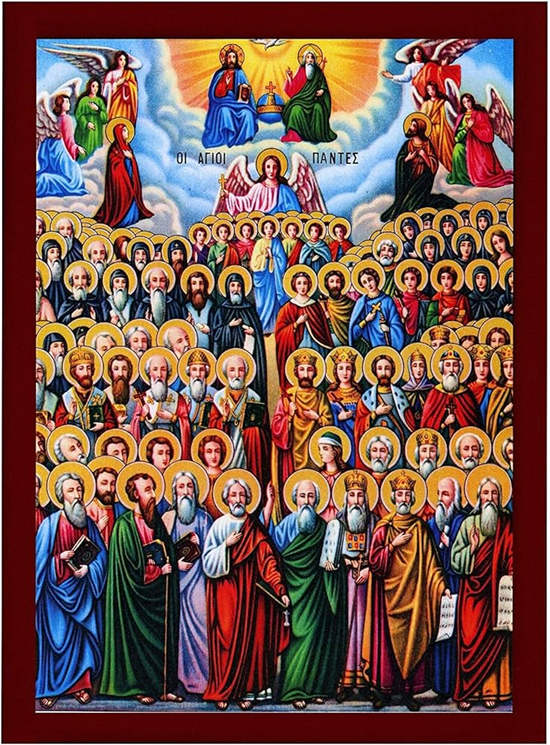
Once again, on this Solemnity of All Saints, I can’t stress more emphatically how badly I believe that traditional Christianity—including our own Roman Catholic Church—has distorted the message of Jesus and the gospels that hold and preserve that teaching. This applies particularly to some of our most fundamental teachings, including those about heaven and hell, salvation and sin. We’re focusing particularly on heaven and salvation today as we celebrate the heroes of our Christian faith, those women and men who, like Saint Paul, “have fought the good fight, [have] finished the race, [and] have kept the faith” [2 Timothy 4:7], bearing witness to it by their lives and deaths. These are the people we call the “holy ones,” the saints.
The traditional understanding of the Christian teachings about heaven and salvation is both behavior-focused and goal-oriented. How much energy have Christians wasted examining, evaluating, and classifying bad behavior? We’ve been taught to look to the Ten Commandments so that we might be clear about what is permitted and what is prohibited by the law of God. We’ve been exposed to the “seven deadly sins” and asked to examine our consciences to determine when and how we’ve transgressed. Even our celebration of the life-giving sacraments of the Church has been infected by the legalistic, laundry-list approach to so-called Christian morality, while, in truth, following Jesus involves nothing of the sort. The saints understood this well.
The promise of reward and the threat of punishment have been used down through the ages to motivate and energize our legalistic and formalistic approach to Christian life through some very non-Christian teachings around heaven and hell. To begin with, the term “hell” appears nowhere in either the Hebrew or the Christian scriptures. The closest the Bible comes to it is when the Hebrew Scriptures use the word Sheol to refer to the abode of the dead, a concept very close to the Greek term Hades. Jesus also referred to it as Gehenna, which was Jerusalem’s garbage dump located nearby in the Hinnom Valley. We can imagine that, when Jesus talked about people’s lives being thrown into Gehenna, it was tantamount to being taken out with the trash.
Even more importantly, in the Scriptures, heaven was not seen as the place of reward where you went when you died. On one hand, heaven was the abode of God and the angels, and even though it was imagined as existing above the sky, it was conceived of more like a state of being than as a place. On the other hand, when Jesus used the term, he spoke of it as the “kingdom of heaven,” which he used interchangeably with the “kingdom of God.” In either case, he was speaking about the reign of God over all that exists, where God’s will is accomplished not only in the unfolding of creation, but also in the expressions of our human hearts. Where God’s will is done, there God reigns, and that is God’s kingdom… the kingdom of heaven. Once we step away from the idea of reward and punishment for human behavior, the whole structure of morality changes.
After the resurrection, the second greatest revelation that occurred with the coming of the Messiah was the radical shift from a rule-based morality to a Spirit-based one. It’s a radical shift from a self-serving spirit of obedience to obtain a reward, to a spirit of loving self-surrender based on a metanoia—that change of mind and heart. The spirit of obedience and the spirit of surrender may seem similar, but they are entirely different. The spirit of obedience depends on external goals, structures, and guidelines: “thou shalt” and “thou shalt not.” The spirit of surrender finds its guidance within, as it seeks to become ever more loving. The two spirits belong to two different worlds of meaning. One says, if you’re good—that is, follow God’s law, God’s rules and regulations—someday, you’ll be rewarded with permission to enter heaven. The other proclaims, if your heart is led by the Spirit of love, you will be “blessed.” That is, you will experience the joy of the Reign of God—entrance into God’s kingdom—right here and now. That is a joy that even death cannot extinguish.
The Scriptures show us two men of God, Moses and Jesus, both revealing God’s law on a mountain. One expression of God’s law is found in the six-hundred-thirteen commandments of the Torah. The other is expressed in today’s gospel reading, the Beatitudes. One focuses on obedience and sin, the other reveals life in God’s Spirit and the joys of God’s kingdom. It’s well past time for us to stop thinking of our behavior in terms of the Law of Moses and its rewards and punishments sometime in the future. Instead, we need to look to the blessings of the kingdom that are ours through trust in God and in the way, the truth, and the life of Christ.
Who are they who are eligible to enjoy the blessings of God’s kingdom? Jesus has spelled it out for us. The kingdom is for us who are poor in spirit, who rely on God rather than on wealth, power, and prestige. It’s given to us who mourn the loss of so many externals that we were attached to and relied upon, leaving us with a reliance on God alone. The kingdom lives within us who meekly accept that we are nothing in the eyes of others, so that we can become more fully aware that we are everything in the eyes of God. The kingdom is within us when we conform our right thinking to the righteousness of God. We experience the kingdom when we’ve mercifully let go of resentment for offenses, real or imagined, and have freed ourselves to experience the unconditional love God has for us. We live the kingdom when the desires of our hearts are no longer tied to the passing things that surround us, and we cling instead to the love of God that guides us and carries us safely into eternity. When we immerse ourselves in the kingdom of God, we gladly give up the fight for or against anything for the sake of peace, knowing that, like Jesus, our victory over evil and death depends not on our own strength but on the grace of God alive within us. And, finally, when chaos surrounds us and it seems as though the universe itself has turned against us, we find in God’s kingdom within us the still, quiet place where God lives and reigns supreme in the indestructible temple of our hearts.
There they are, the eight Beatitudes, the Law not of the Torah but of the kingdom. We are no longer subjects of the old law, people hoping for the rewards of heaven and fearing the punishments of hell. No, we are children of God and heirs to God’s kingdom alive within us, here and now. I want to end this morning’s homily with a beautiful beginning. It’s the opening words of the Liturgy of Saint John Chrysostom, the Liturgy of the Greek Christian Churches. It expresses well our hope in the life of the Beatitudes. “Blessed be the kingdom of the Father, Son, and Holy Spirit, now, and ever and forever. Amen”
Get articles from H. Les Brown delivered to your email inbox