The Pillars of Piety

Ash Wednesday Scripture Readings
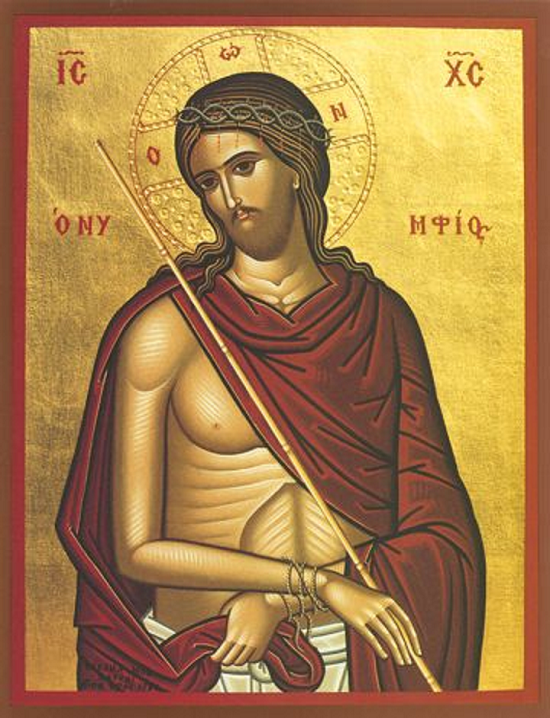
Today’s readings, the rest of the day, and the season it begins complete the movement we began in our Sunday liturgies through the Sermon on the Mount. We’ve already travelled, in our experience of these readings, from the externals of Christian behavior inward, first to the head and then down to the heart. Jesus has already broken open the law—the Torah—and today he breaks open the heart.
Jesus presents us, in today’s gospel reading, with the three pillars of Jewish piety: almsgiving, prayer, and fasting. We could easily extend this to say that these are the three pillars of human piety. They are the essential elements of a life that transcends the physical essentials and opens itself to becoming truly human. Let me take them in reverse, because there’s a logic to the movement. Piety means recognizing that we are not the centers of the universe. We fast and practice self-control and self-denial because we acknowledge that life’s not all about us. Piety also involves an acknowledgment that we are not the source of our own existence, but we recognize in prayer that we are creatures of a power far greater than anything we could conceive of. And, finally, piety involves an acknowledgment that we are neither unique nor solitary but are connected inextricably with the web of all humanity and that humankind is our responsibility.
Jesus then takes these three pillars of piety—almsgiving, prayer, and fasting—and brings them inside. The outside is just performance, as we saw in Sunday’s gospel. The Greek word hypocrite refers to a stage actor playing a role. In Jesus’s understanding, role-playing piety is useless. If it’s not an interior disposition, a fundamental option of the Christian, then it’s meaningless. When Jesus talks about the hypocrites—the stage actors—he’s using a Greek term that means ‘to be paid in full, “transaction received, nothing more owed.” They got exactly what they paid for: applause.
When Jesus counsels his followers to find their piety in the depths of their hearts, what he’s telling them is that it’s there, in the secret holy of holies within that the invisible, ineffable God can be found because that’s where God dwells. And here, we find one of the most beautiful images of all Scripture.
Here is where we’re brought face-to-face with who God is for us. Where is this “in secret” that Jesus speaks of? Where is this hidden place? The Hebrew Scriptures describe God as רחום (rachum), which means merciful and compassionate, a word derived from the Hebrew term for ‘womb,’ the most intimate analogy possible. It goes on to speak of God’s חסד (hesed), which is the love of a mother for her child. It is in our dedication to the pillars of piety—almsgiving, prayer, and fasting—that we encounter the love of God which surpasses all understanding.
So, we begin this season of Lent, this season of return to piety, by receiving ashes, not as an outward sign for others to see, but as a stark reminder that we are of no intrinsic value at all apart from our relationship with God and one another. It’s our invitation to break open our hearts through our embrace of piety and to seek, within their sanctuary, the presence of the living God. It is in that death that we will, in a few weeks’ time, encounter the risen Christ.
Get articles from H. Les Brown delivered to your email inbox