The Responsible Christian

Eleventh Sunday in Ordinary Time Scripture Readings
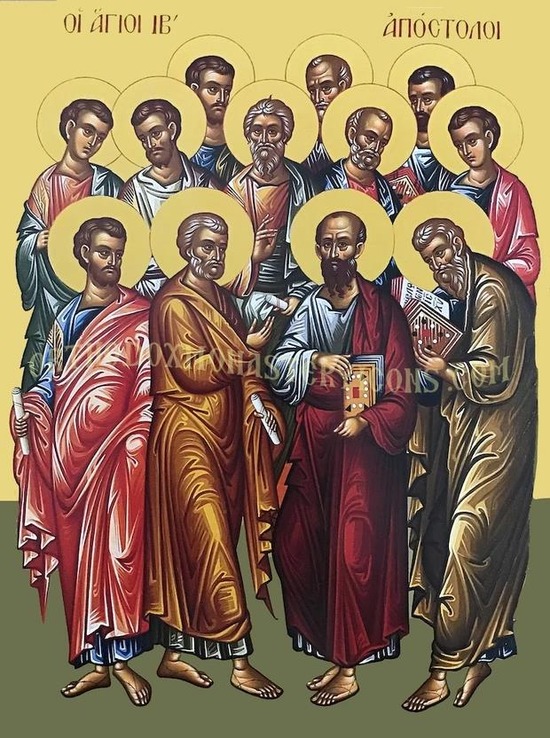
Today’s readings are, without a doubt, among the most radical and confrontational of this or any liturgical year. They seem so familiar, so descriptive of events that took place two thousand years ago, piquing our historical interest. They don’t seem, on the surface, to define the nature of our Christian identity, let alone to stand as a confrontation to much of what passes itself off these days as Christianity. Yet that’s exactly what we have here this morning.
We can sum up the message we’re given in today’s liturgy in one word: responsibility. We can look at this word from two directions. One aspect of it is the ability to respond. Psychology gives us the mechanism: first, there’s a stimulus, then there’s our response. As Viktor Frankl observed from his Auschwitz experience, between those two points—action and reaction—there lies a momentary gap, and it’s into that gap we find both decision and grace. Jesus appears in our gospel passage radically empowered with that ability to respond. “Jesus’s heart was moved with pity for them because they were troubled and abandoned.” That whole phrase, “his heart was moved with pity,” is the translation of a single Greek word, ἐσπλαγχνίσθη (esplanchnisthē). It literally means to have a gut reaction; in this case, Jesus’s whole being reacted with compassion to the condition of the people surrounding him.
Now look at how Matthew describes these people. The first word he uses is ἐσκυλμένοι (eskulmenoi), which means flayed, skinned, worn thin, worn out, threadbare. They’re people drained of energy, drained of hope, barely hanging on. The other word he uses is ἐρριμμένοι (errimmenoi), meaning discarded, abandoned, thrown away as useless. He sees them as sheep without a shepherd, not so much without a leader as without someone to care about them. A good shepherd not only saw that the sheep were fed but also cared for their wounds and illnesses. Get the picture? Responsibility begins with the inability to turn a blind eye to others’ pain and sorrow. A Christian is not compassionate because they feel like they’re supposed to be, but because, like Jesus, they cannot do otherwise. They have a gut response to any and all human suffering.
As responsible people—as Christians—what’s our first reaction to encountering the physical, mental, emotional, or spiritual suffering of others? If you’re like me, it’s the experience of overwhelm. It’s too much. I’m too little. Like the disciples who complained, “Where could we get enough bread to feed such a crowd?” [Matthew 15:33] Again, Jesus shows the way: “Ask the master of the harvest to send out laborers for his harvest.” The response to encountering need is, first of all, prayer. “I can’t; God can.” Next, Jesus bestowed his authority—the authority of the Father—on those laborers: the authority to console, to cure, to raise, to cleanse, and to drive out. It’s every form of compassionate, healing, liberating action shared with us by God himself. And, like the Apostles, in Baptism we were called by name and sent out to carry that compassion into our world.
We’ve often been told that Jesus is our high priest. He is the mediator of a covenant of love between the Father and all of creation. Through the power of the Holy Spirit, Christ’s priesthood reaches the ends of the world—the totality of spacetime. As recipients of that Holy Spirit, we share in Christ’s priestly ministry of compassion. We’re not asked to respond to the needs of humanity with our own limited resources. No. Our response to the worn-out and abandoned is Christ’s response—Christ, pouring the Father’s love and compassion onto humankind through his Body, the Church. And the Church is you and I. We are given the grace, the strength, and the authority to be the mediator between the Father and his world. Christ’s compassion and his healing power reach no one if not through us. It’s through nurturing our response-ability and shouldering our responsibilities as a priestly people that we’re defined as Christians.
How about our own ἐσπλαγχνίσθη (esplanchnisthē)? We live in a world where numbness to human suffering is not only common—as it’s always been—but promoted and even celebrated. People, not only lacking the basic necessities of life, but left to fend for themselves without food, shelter, and basic care, are then blamed for their plight as if that were some kind of reason to justify abandoning them. And, to make matters worse, people, even self-styled Christians, seeing abuse heaped onto those scrounging for basic subsistence or fleeing from oppression, cruelty, prejudice, and injustice, look on their inhumanity with pride and a sense of accomplishment.
The last phrase of the gospel is the one that leaves true followers of Christ without an excuse for their lack of responsibility. “Without cost you have received; without cost you are to give.” This isn’t about charging people for assistance. It isn’t about wasting resources though government giveaways. It’s all about recognizing that, far from being wealthy and self-sufficient, we are all debtors. We created nothing that we have, nor are we responsible for who we’ve become. All of it is gift. We just heard, “…while we were still helpless, [Christ] died… for the ungodly.” Paul calls us in our native state, “ungodly,” and also “sinners,” and “enemies.” Yet God loved and cared for us. Everything we’ve received, we’ve received from God, not because we were worthy of it, but, on the contrary, despite our unworthiness.
I never want to hear from the mouth of someone who styles themself as a Christian that responding to a human need—any human need, regardless of how “unworthy” it may seem—could be characterized as a “waste” of resources or that someone—anyone—didn’t “deserve” help and compassion. Like Jesus, his followers are to be sensitized at a gut level to the needs of others and, as priests of God’s kingdom, compelled to carry the love and compassion of the Father to all. We’ve seen the need. We’ve opened our hearts to the love of the Father. We’ve received the authority to show that love to others. We’ve been called by name. We now have only to go and show that same love and compassion to others who hunger for it. It’s our response-ability.
Get articles from H. Les Brown delivered to your email inbox