The Three Faces of Eucharist

Maundy Thursday Scripture Readings
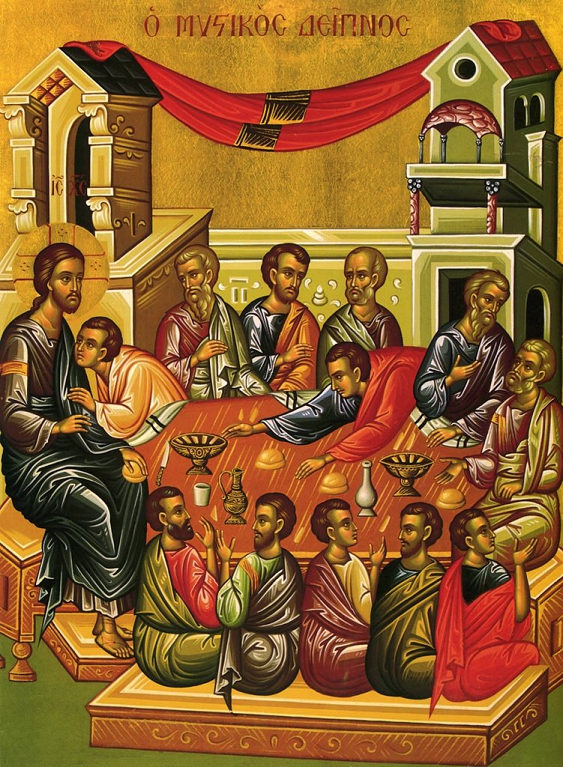
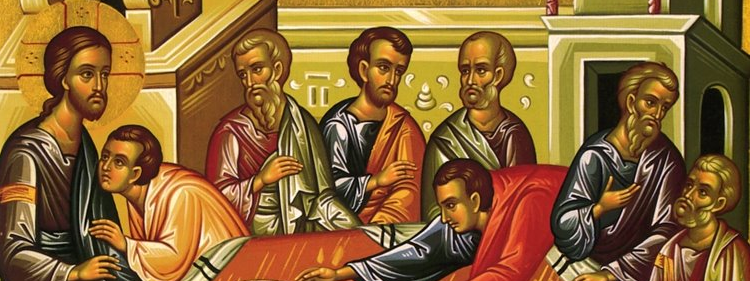
Tonight, the focus is entirely on eucharist. Tonight, we not only observe the eucharist, we descend into it. We experience eucharist as our sacred communal meal. It touches something primal in our psyche. It’s a sharing of the prerequisites of life. Bedouins traditionally will abstain from eating unless and until they have someone to share food with. Hosting a meal causes a shift in “mana;” in prestige and obligation. It places the guests in debt to the host—a debt that must be repaid in kind to maintain both their relationship and their social standing. That spiritual inequality lies at the heart of all thanksgiving—all eucharist—but most especially when we recognize that the one we are most deeply indebted to is God and that our thanks will never be adequate to repay the gift… or will it?
Our debt to God is for much more even than life. It’s too easy to think of God as creator, the One who got this all started, the one who said, “Let there be light.” Yes, God is the one who wound up the clockwork universe, but that lets us off the hook. If we’re just products of God’s great machine, can’t we just say, “Much obliged” and carry on? But no… That God is much too small and much too distant. Ours is a God who gets his hands dirty with time, with human history, and with us. Today’s first reading shows us this God in technicolor. There’s the sacrifice of the lamb—the return of life to the God who bestows life. Then there’s the marking of human dwellings with the lifeblood of that sacrifice that preserves the lives of those within. Then there’s the escape from slavery into freedom—the freedom to offer thanks to our liberator God. Then there’s the escape from those who could put an end to us—our salvation. Even that is followed by a covenant relationship with the One who saved us. And, finally, there’s the memorial meal where we get to be a part here and now of the creator, savior, personal God who has done all these things.
But is that enough? Is sharing in the meal that recapitulates God’s creating, saving, loving actions sufficient to balance the scales of obligation? In our second reading, we come to experience the adequacy of our eucharist, not because of who we are, but because of who he is. What was being offered to the Father in the upper room that night wasn’t an empty, token gesture of thanks, nor a symbolic offering of blood sacrifice, but the Son of God offering thanks to the Father on our behalf.
Jesus’s eucharist ended with a commission to his disciples—to us. He charged us to do this in remembrance of him. This was not to be a commemoration, but anamnesis—a recapitulation of Jesus’s offering of himself, of his sacrifice, of his passover from death to life. “When we eat this bread and drink this cup, we proclaim your death, Lord Jesus, until you come in glory.” Our eucharist is his eucharist. Our thanksgiving is his thanksgiving. Our sacrifice is his sacrifice.
Then, why doesn’t John’s gospel even mention “This is my body” and “This is my blood”? Why does John change the subject and show us an event that none of the other evangelists even mention? What deeper meaning are we being confronted with here that may be drawing us in and implicating us? For a religious tradition that has been so intensely focused on the real presence of Christ in the eucharist, how often we fail to grasp the full meaning of what’s happening. There is a real presence here that is too often glossed over, and Paul warns the Corinthians about the consequences of not recognizing the body and blood of the Lord.
The action that John describes in the gospel is radical. It is the kenosis—the self-emptying—that we heard about on Palm Sunday in the flesh. Jesus emptied himself—taking the form of a slave. Foot-washing was the work of the lowest household servant—Jewish law specified that a Hebrew slave could not be required to do it. Jesus’s laying aside his garments and wrapping himself in a foot washer’s towel would have been like farting at a state dinner—socially inappropriate. No wonder Peter was appalled. In his self-emptying, Jesus has taken the pursuit of power and prestige and emptied it of any meaning or relevance it could have had for his followers.
We may, in the past, have heard that there is a connection between the sacrificial meal of the eucharist and Jesus’s washing his disciples’ feet. That “connection” doesn’t go nearly far enough. We need to recognize that there are not two related things, but only one. John is showing us that the body of Christ in the bread and wine is identical to the body of Christ washing and being washed. They are two sides of the same coin, and even the words used are the same: “Do this in memory of me” and “…as I have done for you, you should also do.” Both are the same anamnesis. Both are making present the body of Christ, emptying himself in thanksgiving to the Father. One bread. One body. One Lord.
If kenosis—self-emptying—is the essence of the Incarnation, and kenosis is the essence of the eucharist, and kenosis is the hallmark of Christ’s body, then service of one another isn’t the result of obeying Jesus’s command to love one another. It’s constitutive of our faith and the means by which God interfaces with the world and we with God. It’s not what a Christian does, it’s what a Christian is.
Dorothy Day—founder of the Catholic Worker movement, who spent fifty years washing the feet of the poor in the most literal sense—was once asked why she did it. She said, “I don’t wash their feet because they are holy. I wash their feet because I am.” The foot washing doesn’t depend on the worthiness of the recipient. It depends on the identity of the one kneeling.
I’m going to leave you today with one simple question for you to ponder. The answer to this question should tell you all you need to know about your Christian faith and allow you to distinguish cleverly between genuine followers of Christ and counterfeit Christians, between those who live the eucharist and those who blaspheme it. Here is the question: Did Jesus wash Judas’s feet? Think about it.
Get articles from H. Les Brown delivered to your email inbox