Is Your Eye Evil?

Twenty-Fifth Sunday in Ordinary Time Scripture Readings
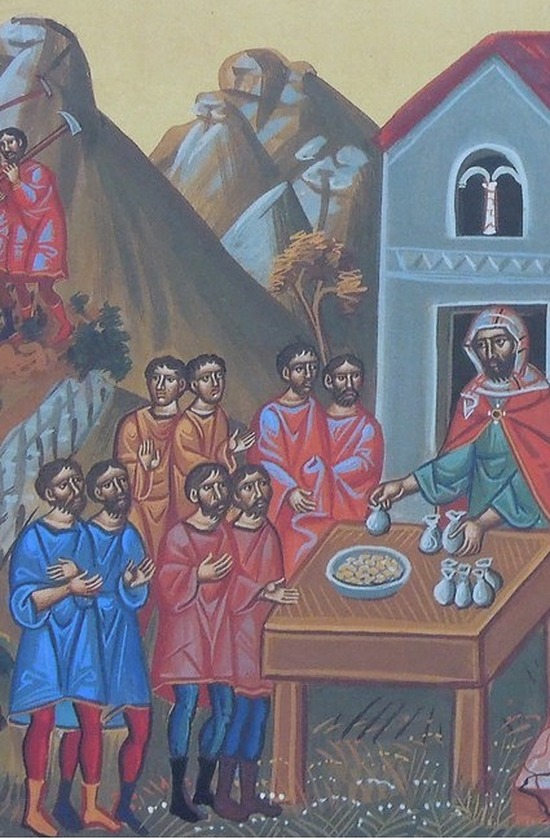
Brace yourselves. Of all the gospel readings we’ve looked at and discussed this cycle of readings, this one, I think, is the greatest indictment of our time and our culture. Let’s start with the characters we find in Jesus’s parable. First, there’s the wealthy landowner who owns a vineyard. This description isn’t a random or frivolous choice. Yahweh God is portrayed throughout the Hebrew scriptures as the owner of a vineyard, while Israel is depicted as the vineyard of the Lord. Evidently, this makes the owner a symbolic stand-in for God the Father who forgives seventy-seven times and is generous and forgiving even to the scoundrel and the wicked who turn to him for mercy.
On the other hand, we have day laborers. The owner went out to find laborers four times: at dawn, mid-morning, noon, mid-afternoon, and late in the day. Each time, he found laborers without work. Each time, they were “standing idle.” That wasn’t because they were lazy. They themselves explained they were waiting there “because no one had hired [them].” They were the unemployed, standing around at gas stations and the Home Depot. They had no job to go to. These were among the most economically vulnerable people in the first-century world, entirely dependent on being selected each morning. A day unchosen meant a day without wages, and a family potentially without food that day. Just because some of them were waiting there late in the day doesn’t mean they’d been idle the whole time. They could have worked part-time and were let go early to try again. These weren’t lazy good-for-nothings, but men hungry for work.
We all know what happened in the parable at the end of the day. Those who worked from five to six in the afternoon were paid one denarius—a standard unskilled worker’s daily wage. Yet those who had worked the whole twelve-hour shift—six a.m. to six p.m.—were paid the same one denarius. I remember thinking even as a boy, “That’s not fair.” We all tend to say that because we’ve been trained to think in a transactional economy where rewards are given and scaled according to what was earned and what one deserves. It seems obvious to us that those who worked longer earned and deserved more than those who only worked an hour. But “‘my thoughts are not your thoughts, nor are your ways my ways,’ says the Lord.”
God doesn’t operate within a merit economy where everyone always receives what’s due them. Rather, God operates within a grace economy where everyone receives not only what’s due them, but more. The question in the gospel isn’t about the fairness of the landowner. He was, after all, fair. He gave each laborer at least what was due him. The landowner said to those who complained, “Are you envious?” Both the Greek text and the Hebrew behind it say, “Is your eye evil?” which means not only envy but also stinginess and begrudging others’ good fortune. There’s the trap that got them… and the trap that gets us still.
The stinginess and envy we see all around us these days is sickening. What’s worse is that the people toward whom this envious rancor is directed are the poorest of the poor. They can have clothing, so long as it’s worn out and out of style. They can have food assistance so long as it’s second-rate, expired, fatty, starchy, and sugary, or doesn’t taste good. They can find temporary shelter, but make it someplace else, particularly somewhere where no decent people would want to live. Give them basic first aid but deny them health care that would make them productive, comfortable, or prolong their lives. And by all means keep them out of our backyards and our cities… and our country. After all… look at them…, they don’t deserve anything better.
What’s even more telling are those who get upset and angry at so-called “government giveaway programs,” where funds are wasted giving basic goods and services to the lazy, the undeserving, and the cheats. It’s unfair. It’s a crime, isn’t it? But, in the words of the Gospel, “is your eye evil because we are good to them?” Generosity is a foreign concept to people who operate exclusively from within a merit economy. Is it any wonder, then, for these people, that their God is a jealous, angry, punishing God? But no, “‘My thoughts are not your thoughts, and your ways are not my ways,’ says the Lord.”
It’s the end of the world, and the whole population of the planet is lined up in front of the pearly gates of heaven waiting for their turn to be let in. They stand in two lines; one line has people like us: hardworking, honest, fair, never doing much of anything seriously wrong—in public at least. In the other line stand the shunned. You know who they are; they’re those people: the lazy, the dishonest, the moochers, the great unwashed. Everyone in our line is standing quietly, self-assured, patient, until we hear a rumbling coming from the front of the line. What’s happening up there? What’s wrong? Then we hear the whispers, “They’re letting them in.” There are cries of outrage all around: “That’s not fair! They don’t deserve it! After all the good I’ve done! If I’d known it would be like this…” And one by one each of them was hauled off to that other place because, unbeknownst to them, that was the last judgment.
“Let the scoundrel forsake his way, and the wicked his thoughts; let him turn to the Lord for mercy; to our God who is generous in forgiving.”
“What if I wish to give this […] one the same as you? Or am I not free to do as I wish with my [grace]?”
Get articles from H. Les Brown delivered to your email inbox