Tenants of the Vineyard

Twenty-Seventh Sunday Scripture Readings
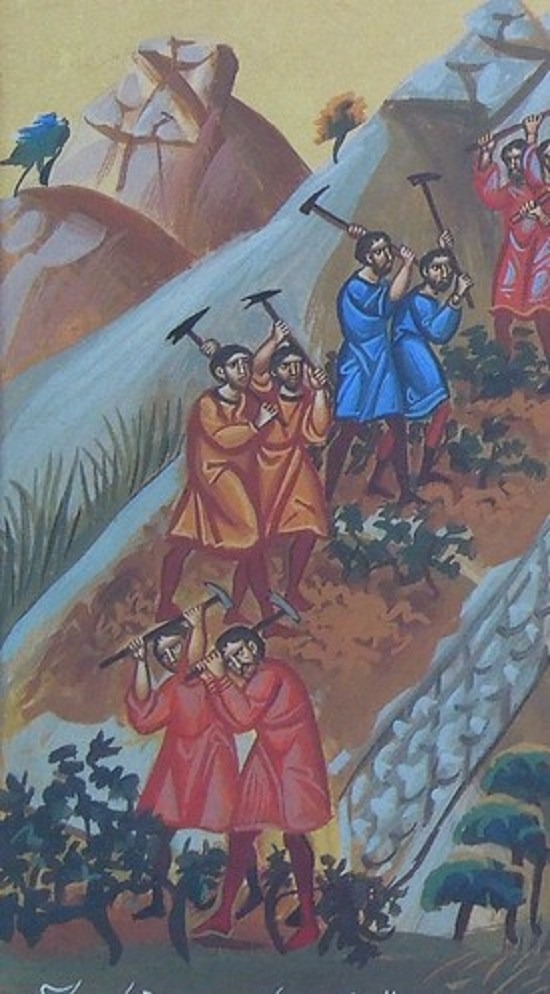
This is the third Sunday in a row where we’re presented with God, the owner of the vineyard, which is his people, Israel. Evidently, today’s gospel reading restates much of what the prophet Isaiah wrote in our first reading, but by doing so, Jesus introduces a significant shift of emphasis. In Isaiah, it’s the vineyard itself—the unfaithful people of Israel—that fails to bear fruit for its master and is therefore wiped out. In the gospel, it isn’t the vineyard itself that disappoints; it’s the tenants called and left behind to care for the vines who fail to produce fruit for their master. In the parable, it’s not God’s people who’ve failed, but their leadership—the same chief priests and elders whom we saw in last week’s gospel. This is an important distinction because it introduces the concept of trust—a trust that we see being violated before our eyes.
We can talk about how the chief priests and elders violated God’s trust by betraying Jesus and his followers. He was evidently the son referred to in the parable sent to collect the fruits of faith in God but was betrayed and put to death out of envy. But, as always, if we leave the gospel readings two thousand years in the past, we miss the point. And the point is a practical application of that reversal—the שוב (shub)—we spoke about last week. What is the condition from which the tenants were called to turn? It’s our old friends, the unholy trinity of wealth, prestige, and power that have dogged humankind from the beginning.
Wealth, prestige, and power are not intrinsically evil. In fact, each of us enjoys all three of them. Wealth is nothing more than having the use of the material world. When we have sufficient wealth, our basic needs are met, physically, intellectually, emotionally, and spiritually. Prestige, in other terms, translates to respect and honor. Prestige is the recognition that underlies all human interactions. And, finally, power, which is both capacity and ability to effect change. Power is the energetic component that enables us to make a difference in our physical and social worlds. What, then, makes wealth, prestige, and power the condition of wickedness and refusal that last week’s liturgy spoke about, and that we find in both today’s parable and in the leadership of Israel in Jesus’s day, as well as in our own?
It all comes down to this: the wicked tenants were brought into the vineyard and entrusted with it to care for it such that it would produce a harvest for the owner. The operative word here is entrusted. The word implies a two-edged sword: privilege and responsibility. They were privileged to be given the vineyard to care for and enjoy its fruits, so long as they fulfilled their responsibility to the One who had entrusted them. But they didn’t. Instead, they acted as though the vineyard were theirs by right, to take over, to exploit, and to dispose of it any way they chose… and no one was going to stand in their way.
What was missing in the case of the tenants, the chief priests and elders, and the leadership of today is that basic sense of humility that makes attitudes of arrogance and entitlement laughable. Humility is that understanding that everything that we have and everything we are is gift. All that is was here before us and will go on after us. In the meantime, we’re not owners, only tenants who have been entrusted with all this for our sake, yes, but more importantly, for the sake of the kingdom.
It’s not the wealth of things that makes wealth part of the unholy trinity; it’s the failure to recognize that all of it is entrusted to us to care for, preserve, and use for the sake of others. The fruits of the vintage of wealth belong to others. It’s not the honor and respect of prestige that makes it part of the unholy trinity, but, once again, the failure to recognize that whatever goodness we possess is a gift entrusted to us. It’s not the exercise of power that makes it part of the unholy trinity, but the failure to use that power to build up the world of humanity, to fight poverty and injustice, and to better the lives of others who may lack the wealth, prestige, and power that we have.
It’s exactly the story that makes Dickens’s A Christmas Carol so enduringly powerful. Scrooge’s wealth, prestige, and power aren’t the focus of this classic. It’s Scrooge’s attitude toward them. As he moves from entitled miser to responsible and responsive humanitarian, we see spelled out in black and white how taking responsibility for life as gifted allows him to come alive and be the gift—the fruits of the vineyard he tends—to go on to gift others.
So, the turning, the שוב (shub) we’re all called to is not the abandonment of wealth, prestige, and power in themselves but the turning from arrogant possessiveness, entitlement, and exploitation to humble acceptance and gratitude, not as owners of our own lives but as tenants, gifted with every grace and responsible for sharing our fruits with those we encounter. It is, after all, all giving to and caring for all that we refer to as the kingdom of God. Perhaps when we pray, “thy kingdom come,” which means, “thy will be done,” we may not be consciously aware that what we’re praying for really is the humility to recognize and the courage to use our giftedness for the benefit of others. Our love for one another is the fruit of God’s vineyard. When the Master looks to us for the harvest, may we never refuse him.
Get articles from H. Les Brown delivered to your email inbox