
God’s Banquet of Love

Twenty-Second Sunday Scripture Readings
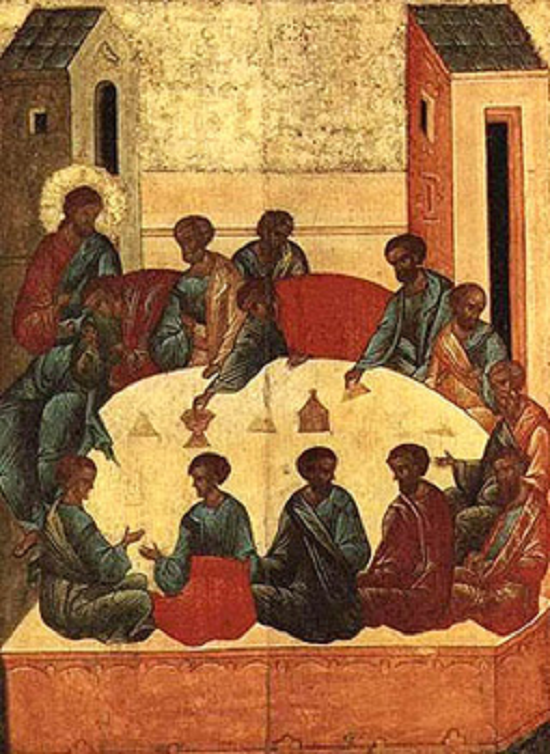
The banquet we’ve just heard about, given by one of the leading Pharisees, is the occasion for Jesus to teach his listeners some important lessons. Don’t think that Jesus is instructing them in social etiquette. Luke uses these lessons to teach, not behaviors concerning a banquet per se, but to enlighten his audience on the nature of God’s kingdom and our place in it. Two lessons are being taught, one directed at the guests, the second directed toward the hosts.
The banquet, certainly, is an image representing the reign of God, which is at hand [Matthew 1:15]. For the Semitic peoples, sharing food implies sharing the life that the food sustains. It’s God himself who invites his people to share an intimate relationship with him, and even his life itself. This image, or parable, that Jesus employs here suggests the universality and diversity of the reign of God. He says, “When you are invited…” not if you’re invited. Taking your place at the table in God’s kingdom has but one requirement: humility. My favorite definition of humility is seeing yourself as God sees you and acting accordingly. Humility has nothing at all to do with humiliation. It’s related to the word humus, the ground, and thus, humility means being grounded in reality. It’s also the basis of true spirituality, which can be defined as having an authentic relationship with reality.
It’s said that the more you know, the more you know that you don’t know. It’s the spiritually challenged who have an exaggerated opinion of who they are. The more inflated their ego, the farther from reality—and from God—they find themselves. The invitation to the banquet of the reign of God is also an invitation to see ourselves as God sees us, that is, as wholly blessed creatures, gifted by God with all we have and all we are. There are no truly self-made women or men in this world, for we are nothing without God’s grace. Even the word “grace” means gift. We bring nothing to the table with us that hasn’t first been given to us. “Blessed are you, Lord, God of all creation. Through your goodness, we have this bread to offer, which earth has given and human hands have made.”
The second image or parable that Luke presents to us in this gospel passage is that of a host inviting others to join in the banquet of the reign of God. It’s not explicitly said, but it’s implied that the host has already been blessed, graced, and gifted to be able to act as host. There is, after all, no greater gift than to have been invited to share God’s life with him and with our sisters and brothers. As beneficiaries of God’s love, we would be totally remiss in not sharing that love and life with others. This doesn’t mean proselytizing or preaching at them; it means literally sharing the life and love we’ve been given with those most in need of it. “When you hold a banquet, invite the poor, the crippled, the lame, the blind. Blessed indeed will you be because of their inability to repay you.”
This is a surprisingly powerful statement. On one hand, the people Jesus is referring to are those who are incapacitated and therefore undeserving. Who, after all, regardless of their condition or status, is deserving of love for any other reason but that we are all fellow human beings and children of God? Nobody is, or can make themselves, deserving of God’s love, nor can they do anything to deserve ours. Grace and love are gifts freely given, and the less deserving the recipient, the greater the gift of love.
On the other hand, there are many ways people seek to be repaid for their love. From my experience, payback in kind is the least of it. People don’t realize that helping others can create a social and spiritual imbalance. A debt of gratitude is still a debt and forms a creditor-debtor relationship. Non-profit organizations tend to attract professional helpers, that is, people whose self-esteem gets a boost from knowing that others are in their debt, and even more so when others acknowledge their generosity. Wealth is not the only payback for generosity. It can come equally effectively through a sense of power or prestige.
In short, genuine love of others cannot come with conditions, or strings attached, or expectations. Interestingly enough, what some people—even nominal Christians—disparage as “woke” is, in fact, nothing but unconditional love under another name. It’s the kind of love that God has graced us with, regardless of how undeserving we may think we are, and the kind of unconditional love that God expects to give to others, irrespective of the cost or the reward. What we may have thought was just a discourse on table etiquette in today’s gospel is so much more. For those who have eyes to see and ears to hear, what Jesus has given us and Luke has reported is nothing less than a treatise on the nature of love: God’s unconditional love for us, to be mirrored by our equally unconditional love for one another.
Get articles from H. Les Brown delivered to your email inbox