
Strive to Enter

Twenty-First Sunday Scripture Readings
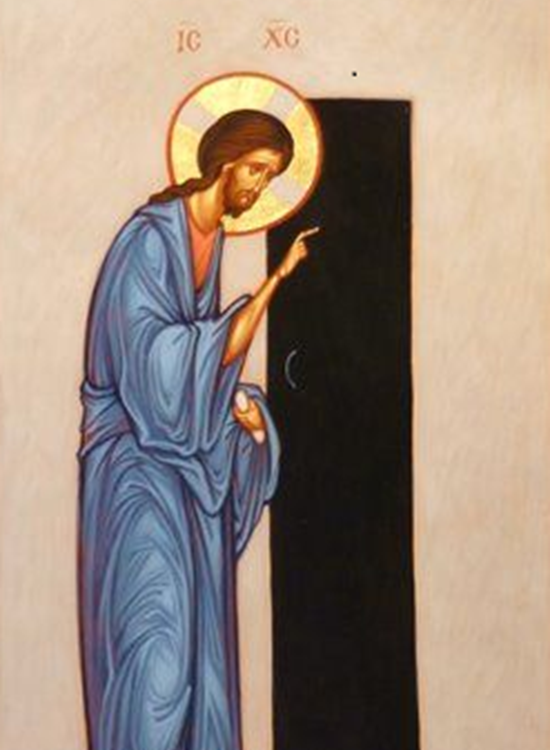
Perhaps we should start our reflections on today’s gospel passage the way Saint Luke did. Like Matthew and Mark, among his sources, Luke had a collection of the sayings of Jesus—a collection that was lost countless centuries ago. There are many places in the gospels where the evangelists grouped several of these sayings together under a common theme or idea. That’s the case here. Luke introduces this collection with a question. “…will only a few people be saved?” However, this question carries with it the presupposition that we understand what it means “to be saved.” We can no longer make that assumption, especially after the nearly two thousand years that have passed since Luke wrote these words.
It’s nearly impossible for us at this distance to hear about “being saved” and not fall into the trap of anthropomorphizing God. We’ve been taught about being saved from the punishment due to sin. People say things like we’ve “offended” God and made God sad or angry—angry enough to send people to a place of eternal punishment. And, somehow, this offense, and therefore this punishment, has infected our whole human race so that, unless God is appeased, we’re all doomed. What kind of made-up God is this who gets angry and inflicts punishment forever without possibility of parole? Whoever that is, that certainly isn’t the God and Father of Our Lord, Jesus Christ—the same Jesus who is the imago Dei, the image of the Father, and who concludes his life on earth with a prayer for forgiveness for his betrayers and executioners.
No. Salvation has little to do with hell, except for the hell-on-earth we humans create for ourselves when, left to our own devices, we give in wholeheartedly to self-will run riot. Salvation addresses the here-and-now every bit as much as it refers to the hereafter. What we need salvation from is the futility and misery we cause for ourselves by taking the easy way out, by pursuing our own ends by our own means, and by relying on our own minds—our own cleverness and power—as we try beating the odds and controlling our own destinies. We need salvation from our reliance on wealth, power, and prestige to get us through and push us ahead. What we most need salvation from is our own egos…that, and the sense of futility and hopelessness that arises in us when it all goes wrong…as it will. The enemy we’re fighting against isn’t some scary demon. No, it’s the machinations of our own weak and terrified little selves.
Now, what’s Jesus’s answer to this conundrum? Did you notice that he didn’t answer the question they asked him? Instead, he turns the question back onto the asker. It doesn’t matter, after all, how many will be saved, as long as we are, right? If there are only a few who will be saved, it’s only because there are many who are unwilling or uninterested in putting in the effort to build a functioning spiritual life. What does Jesus say? “Strive to enter through the narrow gate.” What we need to focus on in this saying isn’t the narrowness of the gate. It’s the word, strive. Jesus calls us to shake ourselves loose from the heavy chains of complacency and inertia, and to put in the effort. Any gate at all is too narrow if we’re unwilling to get up and wrestle with it. It’s not narrow on its own. It’s only narrow if we’re too self-absorbed even to try.
This entire gospel passage is a warning against presumption. It was a clear warning directed at his fellow Israelites who claimed, “We are children of Abraham and heirs to God’s promise. We’re better friends with God than everybody else.” And yet, it’s no less directed at us when we say, “I’m a lifelong Christian. I believe in God and in Jesus Christ. I know my catechism. I know my Bible. I attend church regularly. I’ve got this.” Jesus shakes us and says, “You think so? Let me tell you, you don’t got this.” Merely having the tools of spirituality around us isn’t enough.
Take the sacraments, for example. Yes, they celebrate milestones in our spiritual journey. They celebrate new birth in Christ, coming of age as an adult empowered by the Holy Spirit, seeking reconciliation and healing, beginning a new family, undertaking a new ministry of service, or finding nourishment and strength along the way. All that is true. But, unless we recognize in those same sacraments the challenges they present to us to strengthen and extend ourselves spiritually, we’ve missed the point. We’re not only given a new way of living, we’re challenged to make something of it. We’re not only confirmed as adults in the faith, but we’re challenged to assume adult responsibility for fostering that faith in all our affairs. We’re not only healed from our spiritual and physical maladies, we’re challenged to change our minds and hearts and do things differently from now on. And the spiritual nourishment we receive isn’t just to make us feel good; it’s a challenge to go out in faith to love and serve the Lord and one another.
Listen to those in the gospel who complained that they “…ate and drank in [his] company and [he] taught in their streets.” Yet he says to them, “I do not know where you are [coming] from.” Passive acceptance of a spiritual life is next to worthless. Those people hung around Jesus and listened to his homilies. But what did they do? Where was their effort? How did they strive to do and to be more than the hangers-on around them? Being a Jesus groupie avails us nothing. The world is full of Jesus groupies. He challenges us to do better than that. He challenges us to put our trust in God rather than in our own power. He challenges us to pray as though everything depends on God, because it does. He challenges us to establish and maintain an intimate relationship with God—Father, Son, and Spirit—just as he had.
What are we to gain by all our efforts, not just to be “good” people, but to spiritually fit people? Or, as I’m fond of saying, heaven, or paradise, or salvation, or whatever name we want to give it, isn’t a place where we go when we die…and it certainly isn’t “up.” Heaven is a state of mind. It’s a state of serenity and tranquility where we’re at peace with ourselves, with the world, and with God. It’s a state of contentment where all our needs are met—not our wants, but our needs. And, if our needs aren’t currently being met, it’s still a state of contentment because we have faith. We trust in God’s assurance that, one way or another, our needs will be met, so long as we let go of our expectations about what that’s going to look like. God’s full of surprises.
The state of contentment and ultimate trust we’re talking about isn’t easy to attain. It’s our salvation, and it’s the narrow gate through which we’re challenged to enter. It’s the peace that this world cannot give. We can see all around us, in stark contrast to this, those dedicated to the pursuit of money, property, and prestige. Who would envy them or want their lives? As Jesus cautions us, we can’t assume that the peace and contentment we’ve been promised will be ours simply as a result of who we are or the work we’ve done in the past. Entering the narrow gate takes effort. We have to strive to enter it every day, as we turn away from the futile promises of wealth, property, and prestige, and turn our minds and our wills over to our God. If we give it all our heart and soul and mind and strength, what will be ours will be the peace and contentment of being at one with God, at one with others, and, at long last, with ourselves. Isn’t it awesome that we don’t have to wait until we’re dead to experience heaven?
Get articles from H. Les Brown delivered to your email inbox