Do Not Be Afraid

Fourth Sunday of Advent Scripture Readings
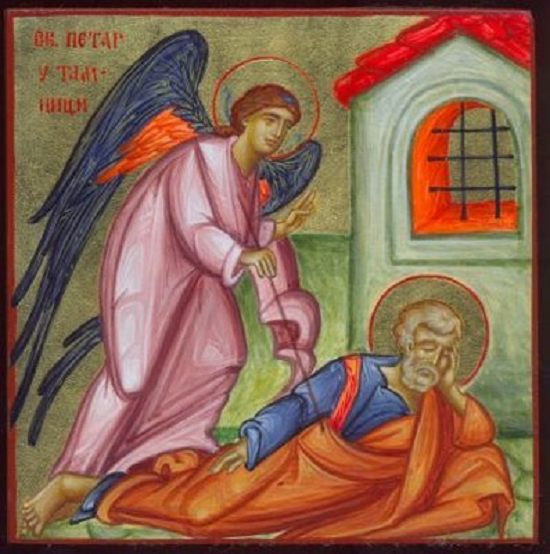
Today’s gospel reading, taken from the Gospel of Matthew, shows us a very different approach to and perspective on the birth of the Messiah from what we read in Luke’s Gospel. Luke, writing to the Greeks, describes Jesus’s birth in great detail with the census, the inn, the manger, the shepherds, and the angels. In contrast, Matthew, writing to the Hebrews, relegates the birth narrative to a single sentence, “[Joseph] had no relations with [Mary] until she bore a son, and he named him Jesus.” That’s it. That’s all there is. Whereas Luke spends a great deal of his gospel focusing on Mary—the annunciation, the visitation, the trip to Bethlehem, and Jesus’s birth—Matthew has none of that, focusing almost exclusively on Joseph and his visitation by an angel. Matthew barely gives Mary honorable mention here.
Why does Matthew focus on Joseph to such a degree? The clues can be found in the first verses of Matthew’s Gospel, those immediately preceding our text this morning. This gospel starts out with a long recitation of Jesus’s genealogy. It’s there for a very specific and good reason. Matthew wants to show his readers from the Jewish faith and traditions that Jesus was, in provable fact, a direct descendant of King David and therefore heir to God’s promise that a Son of David would be the Messiah, the savior king. Therefore, since inheritance passed through the line of male descendants, it was to Joseph, a man in that direct line from David, that the angel came to announce the birth of that promised king. What’s more, the angel—God’s messenger—came to stop Joseph from doing the wrong thing.
As I’m sure you’ve heard, marriage in early Judaism was a two-step process. Step one was for the couple, under the guidance of their parents, to draw up a contract, called the ketubah, stipulating their rights and duties and how the groom was to prepare the household for his bride. Once the ketubah was signed, the groom was committed to come and take his wife to his home as soon as he had everything prepared. At that point, the marriage was consummated. At any time prior to that, the partners could formally withdraw from the ketubah, and the marriage itself would be called off. It wasn’t, in the strict sense, a divorce, but more like breaking an engagement contract. That’s what Joseph was considering when he learned of Mary’s pregnancy. The gospel calls Joseph a “righteous” man. What that means, in fact, is that he was observant of the Law of Moses. If it became publicly known that the woman was pregnant after the signing of the ketubah but before the actual marriage, when she was taken to live with the man, she would be exposed to the harsh penalties of the law, a typical double standard. By breaking the ketubah quietly, Joseph would spare Mary those consequences. I’m sure Joseph wanted to appear kind, but his kindness was at least partly a cover for his cowardice.
Sometimes, as in this case, kindness isn’t always the best choice. Jesus’s relationship with his ancestor, David, depended on Joseph being his father… at least legally. The angel counseled Joseph to proceed in haste with the marriage, saying, “…do not be afraid to take Mary your wife to your home.” The angel declares to him that Mary, immersed in the power of the Holy Spirit of God, had conceived this child. In that sense, she had conceived the inconceivable. The child was to be a son, and therefore an heir of God’s promise to David through him—through Joseph. The boy was to be named Yehoshua in Hebrew—Joshua in English, and Jesus from the Greek and Latin—after the successor to Moses who conquered and entered the land of Canaan, the promised land. As I’ve said before, the Hebrew of Jesus’s name means Yahweh is savior. It’s at this point that the gospel indicates the imminent radical shift in our human perspective. The angel says, “…because he will save his people from their sins.” This is far different from the savior the Jewish nation had been expecting up until that moment, a savior from oppression and woe.
This shift in perspective is yet another example of prophecy in its genuine sense, rather than a supposed foretelling of the future. As we’ve seen again and again in our encounters with the Scriptures, prophetic words and actions are open to deeper understandings as situations and environments evolve. So it is here. The angel quotes from the Prophet Isaiah, that familiar passage that has become infamous because of the controversies surrounding them. Yet, they’re deliberately ambiguous. Properly understood, they deflect the readers’ concerns away from the biology and toward the earthshattering meaning of the events they prefigure. They speak of a young girl who will conceive and bear a son, in Hebrew, עַלֽמָה (‘almah), which doesn’t necessarily mean a virgin in the strict sense. The emphasis in that text is not on the word for young girl, but on the identity of the son, Emmanuel: God, both among us and within us. Joseph is told that the child for whom he will be the father will mark a seismic shift in the history of the world, from a state of alienation from God to that moment when God will have broken into human history. This is the moment when, properly understood, God’s reconciliation and identification with humankind are to be realized.
At the opening of our gospel reading, we find that the man Joseph—observant of the law and with good intentions—is about to make a terrible mistake. Without his understanding it, the will of God was already making itself manifest in Mary’s pregnancy. Yet, God’s promise to David that his descendant would reign on his throne forever was being challenged by Joseph’s obedience to the Law. Joseph was afraid. He was afraid because he was facing the unknown. For him, as so often happens with us, doing the expected thing in obedience to custom and law is also doing the safe thing rather than the right thing. How often does fear of external consequences hold us back from following the sometimes-unorthodox promptings of our consciences? Whether Joseph heard the voice of the angel in his ears or was moved by an inner compulsion to see things differently and make different choices is a moot question.
As the angel spoke to Joseph, that same messenger from God speaks to us. Faced with disapproval or criticism or even penalties incurred by disobedience to rules and laws, we may hesitate as Joseph did to follow the urgings of our hearts to do the right thing. The angel says to us what was said to Joseph: “Do not be afraid.” Do not yield to the temptation to do the safe thing rather than the right thing. When we act with the courage of our convictions, even when it makes no sense, and the way forward is unclear, we follow in the footsteps of Joseph and Mary as we allow Yehoshua, Jesus, Yahweh, the savior, to be born again through us into our world. Do not be afraid because Emmanuel, God, is truly with us.
Get articles from H. Les Brown delivered to your email inbox