Old Misconceptions

Third Sunday of Advent Scripture Readings
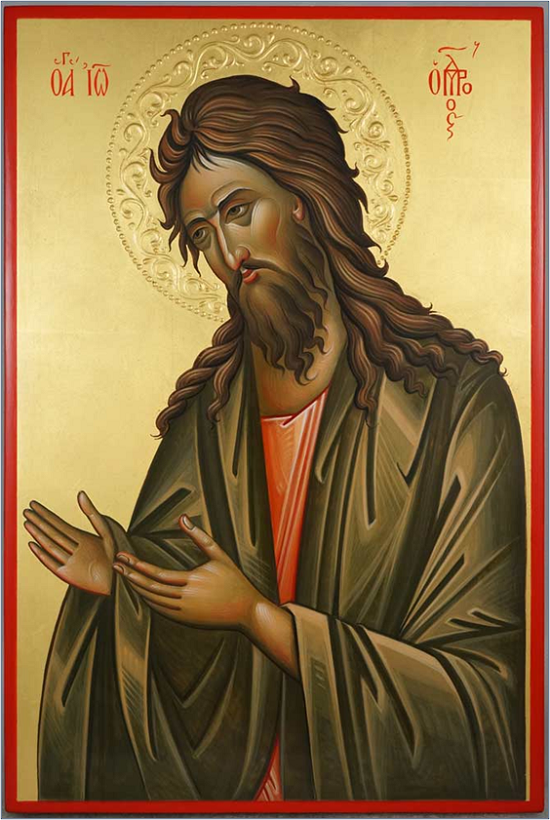
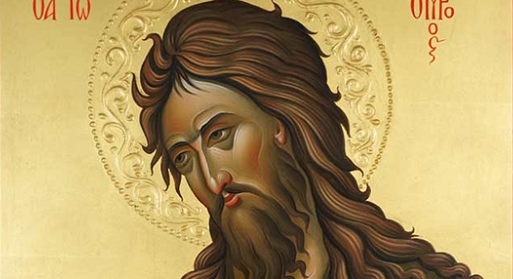
Old misconceptions never die. John the Baptist misunderstood the nature and mission of the coming Messiah, and people are still deceived by that same misunderstanding to this day. Why do you think John sent his disciples to Jesus, as we heard in today’s gospel? What caused him to ask, “Are you the one who is to come, or should we look for another?” John was evidently confused. On the one hand, John’s spiritual discernment recognized Jesus, according to Luke’s Gospel [Luke 1:39-5], even before he was born. We read that John stirred in his mother’s womb when Elizabeth heard Jesus’s mother’s voice when she came to visit. It’s no wonder, then, that John would have known who Jesus truly was—not just as his relative, but as the one sent from God. John must have believed in his heart and soul that Jesus was the “one who is to come”—the Messiah—and yet Jesus wasn’t acting like it.
The snippets that have come down to us from John’s preaching tell us that his was a message and baptism of repentance. He called the Pharisees and Sadducees a “brood of vipers” in last Sunday’s gospel reading and asked what made them flee from the “wrath to come.” That tells us a lot about John’s mentality. He saw the coming of what he called the “kingdom of heaven” as the moment when God’s wrath would flare up to destroy all evil-doers and to welcome the righteous into glory. For John, the advent of God’s kingdom would be marked by a terrible day of judgment. Therefore, his message was one grounded in fear: change your hearts and change your ways because God’s coming to get you.
That’s why John was so confused. Jesus wasn’t behaving—or even preaching—the way John expected that he would. His message and behavior were completely the opposite of what John anticipated. What happens when God acts in unexpected ways? We begin to doubt. We start by doubting ourselves—maybe we’ve been wrong all this time—and we end up doubting God—maybe God doesn’t care about us, after all. In just this way, John doubted himself—maybe he was wrong about who Jesus is—and ended up doubting Jesus—“Are you the one who is to come, or should we look for another?”
Jesus’s answer to John served a dual purpose. He answered John by pointing to the great signs that he performed, signs which John no doubt had heard a great deal about. And the signs Jesus chose to mention were those of the coming kingdom, as the Prophet Isaiah had mentioned, a very different kingdom from the one John was anticipating. The signs he pointed to were those that accompanied the coming of Yahweh into the world: “…then will the eyes of the blind be opened, the ears of the deaf be cleared; then will the lame leap like a stag, then the tongue of the mute will sing.” And Isaiah calls these things nothing less than “the glory of Yahweh, the splendor of our God.” Here’s the clincher: Isaiah says, “Here is your God, he comes with vindication; with divine recompense he comes to save you.” He speaks of salvation rather than retribution, and that’s the passage that Jesus references in his reply to John’s question.
Here’s the second purpose of Jesus’s reply: he not only identifies himself with the coming of Yahweh, bringing salvation from all that ails humanity, but he also corrects John’s notion of the coming kingdom of heaven. Rather than a judgment of condemnation, Jesus speaks of a kingdom of compassion and healing. We can only hope that John was listening to the lesson that Jesus was teaching him, because many from that time to this have missed it. When we consider Jesus’s disciples’ attitudes throughout the gospels, we can safely assume that even they didn’t get the message. Up until the resurrection, they still expected Jesus to overthrow the Romans and to punish evildoers and unbelievers. It took them a while to come around.
And yet, here we are today, surrounded by people preaching a fearful message of the wrath to come, apparently ignorant of the good news of salvation and liberation that Jesus came to bring. As I said, old misconceptions never die. For some reason, it seems that the doctrine of vengeance and punishment, hurt and destruction is easier to accept than the gospel of kindness, love, compassion, and healing. Is it really so difficult to imagine that God accepts others unconditionally, regardless of their opinions, attitudes, or behaviors, when we know in our hearts that God has unconditionally accepted us? It’s fascinating to consider that the God about whom it’s written, “‘Vengeance is mine,’ says the Lord” [Deuteronomy 32:35], refuses to act with vengeance. So, those who take it upon themselves to exact revenge in God’s name are themselves guilty of both blasphemy and idolatry. Blasphemy because they act as if God is too weak to take vengeance on evildoers, so they have to do it for him; and idolatry because they think they’re the ones who should act in God’s stead.
We’re preparing for Christmas, when we acknowledge that the divine Prince of Peace has broken into our human story. Once again, the gospel reminds us that the kingdom of heaven that Jesus revealed isn’t “out there” someplace in some far-off distant future. The kingdom of heaven is, as the Greek says, ἐν ὑμιν (en humin), which means, at the same time, “within us” and “among us.” Christmas is nothing more or less than a yearly reminder of that fact. So, we prepare to celebrate Christmas by recommitting ourselves to the nature and essence of that kingdom, a kingdom of righteousness, justice, peace, joy, humility, service, and love. The kingdom is present in our world through our own kindness and compassion as expressed in our thoughts, words, and deeds, bringing sight to the physically and spiritually blind, strength to the weak, healing to the sick, new life to the despairing, and good news to the poor, the homeless, immigrants and refugees, the knowledge that God, incarnate in us, loves them.
Get articles from H. Les Brown delivered to your email inbox