Three Baptisms

Second Sunday of Advent Scripture Readings
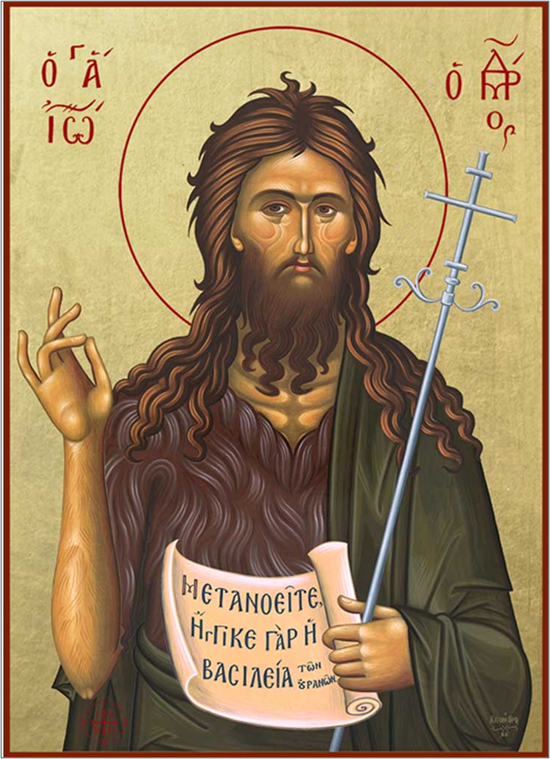
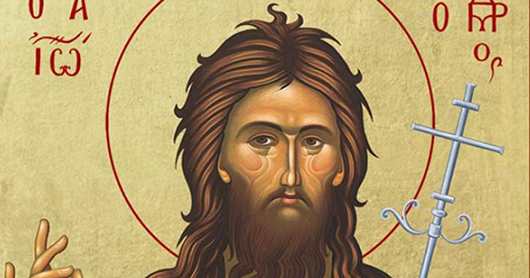
We’re going to start today’s reflection on the gospel with John the Baptist’s preaching. He was a preacher, after all, not only a baptizer. You just heard his message as quoted by Saint Matthew: “Repent, for the kingdom of heaven”—that is, the reign of God—“is at hand.” It’s a clear and simple message, to be sure. Yet, surprisingly, that was exactly the message that Jesus presented in his preaching: repent and believe. Many in Jesus’s day believed that John was the Messiah. According to the Gospel of John, Peter’s brother, Andrew, and John the evangelist himself had been disciples of John the Baptist before they met Jesus. It’s also reported that, when Saint Paul arrived in Ephesus, he found believers who had been disciples of the Baptist, as well. In fact, the cult of John the Baptist survived well into the first century, AD. There was even a sort of rivalry between John’s followers and Jesus’s disciples in the early Church, especially because Jesus, too, had been baptizing, as we read in the Gospel of John. It’s no wonder that there was confusion between the vocations and missions of John the Baptist and Jesus.
Considering their similarities gives us an opportunity to sort out their differences in our own minds, as well. We’ll see that baptism, as a rite, can be viewed from three perspectives and has three related but distinct meanings. The first, and most obvious meaning, is as a cleansing. That’s how it was used in the Essene community at Qumran, located only a few miles away from where John was baptizing in the Jordan River. Thanks to the Dead Sea Scrolls, we know quite a bit about the beliefs and practices of this Jewish sect. For them, immersion in water was a necessary ritual to be performed before religious practices. It expressed a purification from the dust and dirt of daily preoccupations in preparation for encountering Yahweh God in prayer or the reading of the Scriptures. Washing and purification, then, is the first and most evident symbolic meaning of baptism.
But this was not the baptism that John, and later on, Jesus practiced. John’s was a baptism of repentance. We’re familiar with the term “repentance.” We’ve met it often. It’s much more than a ritual cleansing that needs to be repeated again and again. No. For John, the baptism he preached and practiced was an outward expression of an inner metanoia—the change of mind and heart that transforms a person and leaves them different from the way they were before. John’s baptism was a sign of a person’s commitment to leaving behind an old way of life and taking up a new direction. That’s why it was so appropriate for Jesus to begin his public ministry with baptism. That had nothing to do with repentance from sin for Jesus—unlike the Pharisees and Sadducees in today’s gospel—but it indicated a total shift in life direction from a focus on personal growth and preparation to a commitment to the role of preacher, teacher, and healer for the sake of others. So, we can see that this second form of baptism, in addition to a turning away from a previous way of life, indicated a commitment to a radical new life direction.
Yet even this is not yet Christian baptism. That, of course, encompasses those earlier forms of baptism, but it’s so much more. Jesus impressed this fact on his disciples when he asked James and John, “…can you be baptized with the baptism I am baptized with?” [Mark 10:38] It’s that baptism that Jesus was baptized with—his descent into the grave and his resurrection from the dead—that takes John’s symbolic action from a mere sign of a change of heart to a transformation of one’s entire being, body, and soul. It’s the metamorphosis from death to life that takes the waters of Baptism from a rite of passage to a sacrament. Christian Baptism, as a pledge of our union with the death and resurrection of Christ, is, likewise, the down payment on our resurrection.
You know, I love sharing these insights on the Scriptures with you. If you think you get a lot out of them, I get so much more. As I considered that last thought, identifying Christian Baptism as a sacrament, I finally understood what was meant by that word. For decades, I’ve wondered why we call our liturgical actions sacraments, only to have it come clear now. I don’t mean the definition of the word we were taught as children: an outward sign instituted by Christ to give grace. That may be true, but it doesn’t explain the use of the word. In the Roman world, the sacramentum was the oath that Roman soldiers took as they were commissioned into service. What was the connection? I didn’t understand until just now. What I finally saw as I considered our Baptism as a sacrament was that it embodies a pledge—an oath, if you will—on the part of God to whoever commits themselves to join Christ in his suffering and death that God will raise them to life with him forever, just as Christ was raised.
It’s essential that we keep these three very different aspects of baptism clear in our minds. Christian Baptism isn’t just a purification from self-centeredness and sin, although it is that. It’s also a metanoia, a change of mind and heart, from a focus on frivolous and futile preoccupations to a commitment to living a meaningful life, caring about our relationships with others and with God. And Christian Baptism—our sacramentum—goes way beyond even that, as a commitment to release our death-grip on controlling our own lives and surrendering them completely into the care of our loving God. The God who gave his own Son to us as the pledge that he who raised Jesus from the dead will do the same for us and for the same reason: because he loves us fully and intensely as only God can love. It’s into that unimaginable love that we’ve been baptized—as John promised us—with the Holy Spirit and with fire.
Get articles from H. Les Brown delivered to your email inbox