Genuine Happiness

Fourth Sunday Scripture Readings
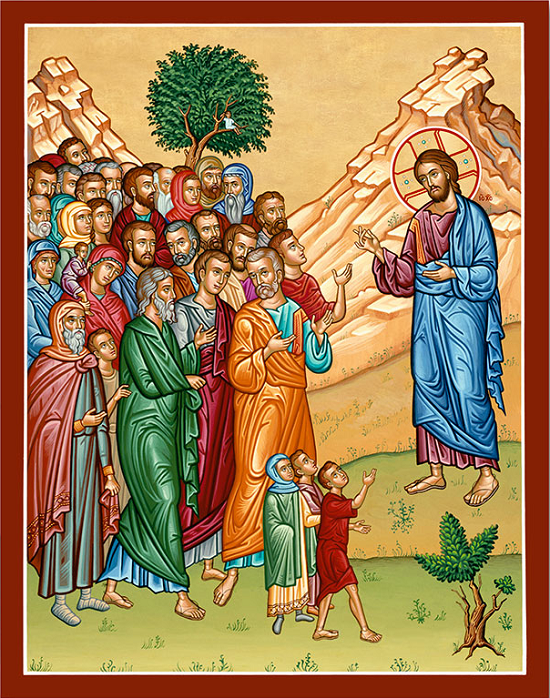
What can I say? How could anything I say about Jesus’s Sermon on the Mount that we begin to hear in today’s gospel reading not be a condemnation of all that’s happening in our country and our world? After all, this Sermon on the Mount is Jesus’s manifesto, and it should, by rights, be the manifesto of all Christians—of all who purport to be following Jesus. It’s a source of never-ending sorrow and shame that it isn’t. It’s been tossed aside in favor of a new legalism, a new Pharisaism that replaces the Torah with the idols of wealth, power, and prestige and even goes so far as to condemn those not blessed by these three gods of the technological state to hunger, disease, prison, exile, and yes, even to death.
We don’t have to talk about all eight of Matthew’s beatitudes to know where Jesus stands. The phrase “blessed are” is a common one in the Hebrew Scriptures. This blessing is a sign of God’s favor. It’s entirely different from the so-called blessings of wealth, power, and prestige. Some psalms translate the word as “happy.” Think about what it means to be truly happy. Doesn’t it come from a sense of inner peace and contentment? Isn’t it akin to the sense that you are authentically who you really are and that you know you are where you are meant to be? Blessedness—happiness—is the inner sense of wholeness that the Greek philosopher and slave felt when he said, “Master, from this moment on, I am no longer your slave; I choose to serve you willingly.”
To whom does this blessing come? On whom does it descend? Matthew opens this great Christian manifesto with “Blessed are the poor in spirit.” This goes a step beyond Luke’s version, who wrote, “Blessed are you poor.” The concept of poor in spirit has very little to do with destitution. Instead, it refers to the underclass. They’re the ones unsure of where their next meal is coming from, whether they’ll have a roof over their heads tomorrow, whether their minimum wage job will be eliminated, whether their children will be treated at the clinic, whether those in power will find an excuse to have them arrested or deported, or whether anybody will pay any attention to them at all. They are the poor in spirit. They are the ones whom the Hebrew Scriptures call the עֲנָוִים (anawim), the little ones, the forgotten ones, the powerless ones. It is those who are God’s favorites. Why? Because they have given up trying to replace God with wealth, power, and prestige. They are the ones who know, down to the marrow in their bones, that God is their one-and-only source and one-and-only salvation.
We read that, when Jesus began his public ministry, he went around Galilee and Judea preaching. We know his message: change your hearts and minds and believe the gospel—the good news. What is this “gospel” he was preaching about? Was it that the Messiah had come? Okay, so what? Was it that our sins were forgiven? Possibly, but we only have Jesus’s word for it. Was it the resurrection and the gift of eternal life? I guess so, but I’m sure Jesus didn’t preach about his crucifixion before the fact. Then, if these things weren’t the good news, what is it? It’s that being among the little ones—the anawim—the poor in spirit is not a punishment from God, but a blessing. The good news is that all those things you thought were so important and worth striving for aren’t. They’re illusions. You already have everything you need, and, what’s more, when you suffer want or injustice, your God is there with you through it all. You are not alone. You are not a victim; you are not being punished. Instead, you are blessed. And, as for those who have the wealth, power, and prestige, if they only knew the peace of mind that is yours, they would envy you.
You know, my dear friends, there is something so immeasurably and sickeningly perverse about causing harm and suffering to God’s anawim, God’s poor in spirit. And there is something terrifyingly evil about anyone who would gloat over it and cheer it on. As Saint Luke’s version of the Beatitudes says, “Woe” to them. While we feel sorrow for those who suffer from their cruelty and do whatever we can to alleviate their suffering, their situations can, in time, improve. But we must feel deep pity for those who look down on them and cause them injury, believing they’re powerful and in control. They’re ignorant of their own spiritual weakness and poverty; therefore, they neither ask for nor seek help. Short of an existential slap-upside-the-head, they’re lost. Their poverty is irremediable. How tragic is that?
Get articles from H. Les Brown delivered to your email inbox