Eat You All Up

Solemnity of the Most Holy Body and Blood of Christ Scripture Readings
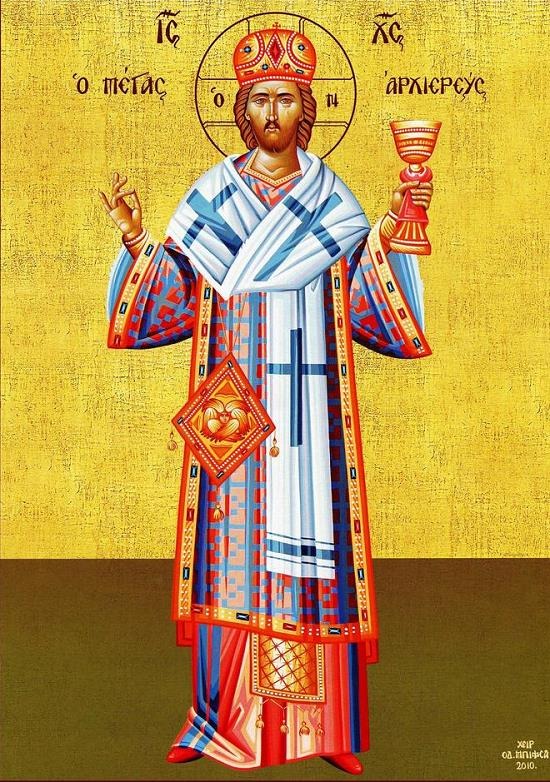
“I love you so much, I could just eat you all up.” Ever thought that about anyone? Ever said that to them? Ever gnawed on their ear? What were you doing? What were you feeling? What were you wanting? You weren’t hungry—at least I hope you weren’t. Cannibalism is frowned upon. You weren’t wishing to digest them. If you did, who knows? You might be hungry again in an hour. No, that’s not what you wanted. You wanted them inside you so that the two of you could get even closer than you already were. You wanted the boundaries between you that kept you from intermingling to collapse. You wanted them to be you and you to be them so that all the distinctions between you could dissolve, and yet, you could still be you, and they could still be them, only together, inseparable. If you’ve ever had that experience, then today’s readings and today’s feast of the Body and Blood of Christ should make perfect sense to you.
One thing we have to be certain of when thinking about our God is that God cannot be inanimate. As the source of life and consciousness, God must necessarily be both alive and conscious par excellence. When we humans delve deeply into the nature of the universe, many believe, as I do, that evidence points strongly to the fact that the universe itself is alive—life is a substrate of all that is. And, not only that, but that each of us is an expression of the universe being conscious of itself. From this perspective, we can look at last week’s celebration of the Holy Trinity from yet another perspective: the Father, the source of life, speaks that life into existence in his living Word, the Christ, and that life enlivens all who receive it as the living, loving Spirit.
The life of the Father, shared with the Son, is the living Spirit, permeating all of creation. What we see in the Trinity is the phrase, “I love you so much I could eat you all up,” happening in real time. It is nearly perfect. The only thing missing is for creation—that is, all that is not to be included in this indwelling of the Son by the Father and the Father by the Son is the whole of creation. All we need to do to join in this divine love-fest is to agree. Yet in order to agree to join it, we must learn about it. That’s where we depend on God himself to show us how.
God has always shown himself to humankind as the giver of life, even when humankind proved itself to be both unworthy and ungrateful. Today’s first reading from Deuteronomy is an anamnesis. It’s an opportunity to encounter again all the times that God responded to their needs and ours, giving them bread to preserve their physical lives, and his Word—that is, himself—to preserve their spiritual, deathless lives. Yet we stand at a transition point. The bread that God gives is for us to consume… to make it part of ourselves. Yet through a metanoia, a change of mind and heart, the roles are reversed. When we receive nourishment with gratitude to the One who provides it—with eucharist—we are consumed by the gift and taken into the life of the giver.
“I am the living bread.” Jesus calls himself the living bread—not bread from a heaven far away and in the future, but bread in the here and now. It is the bread of the reign of God and the life of God. It’s the life of God made flesh… made real, touchable, tastable, experiential. Jesus almost makes this too real. He speaks of eating his flesh (not body… but flesh) using the Greek word φαγεῖν (phagein), to consume. Yet, in today’s Gospel passage, when he finally says, “Whoever eats my flesh and drinks my blood has eternal life…” the word he uses is τρώγειν (trōgein), which means literally, to chew on. Jesus wants his followers to “eat him all up,” to take him within and make him one with us, so that we may, at the same time, become one with him.
The result of becoming one with Christ and letting him make us one with him is the answer to the prayer Jesus offered at the Last Supper: that just as the Father is in him and he is in the Father, we likewise might be in him and he in us. And there, spelled out for us is the meaning of eternal life. Just as Jesus is one with the Source of life and therefore death had no power over him, so by becoming one with Christ, the Source of life lives in us. Since we all live but one life—the life of the Father, therefore, we are more than brothers and sisters. We are branches of the same vine. We, too, are one. Almost from the beginning, Christ’s followers became focused on their differences. Who could be a Christian? Did you need to be circumcised and follow the Law of Moses? Were only men privileged to be a follower? Did you have to be from the right people, speak the same language, have the same doctrines, worship the same way?
Read the gospels. There were Jews, Samaritans, and Greeks. There were dishonest tax collectors and prostitutes. There was even an Ethiopian eunuch. There was a pagan Roman centurion. The Christian Scriptures insist, not on uniformity but on the incredible diversity of God’s life and love. It is not our unity that brings us to eat the Bread of Life, but it is the eating of the Bread of Life that makes us one. “Because the loaf of bread is one, we, though many, are one body, for we all partake of the one loaf.”
When we talk about partaking of the Body and Blood of Christ, we’re really speaking of participating in his life, which is the life of the Father alive in the Holy Spirit. We are, as it were, grafted onto the Holy Trinity, sharing God’s life-energy. It is truly the unity that we long for while making love. Union with the Father through the Son, in the Holy Spirit. It is union-with, com-union, in Greek, κοινωνία (koinōnia). Too often, that’s translated as “fellowship” as though fellowship could consume us. No, we come together here today for communion: communion with the life of the Trinity, communion with each other, forever memorialized in the bread and wine of the eucharist, and communion with all those who seek God, even those who don’t look like us, don’t talk like us, don’t worship like us, don’t even believe like us. The unity we share is deeper than all that. It’s a common life, a communion, a κοινωνία with the Father, and the Son, and the Holy Spirit.
Get articles from H. Les Brown delivered to your email inbox