Return to God What’s God’s

Twenty-Ninth Sunday Scripture Readings
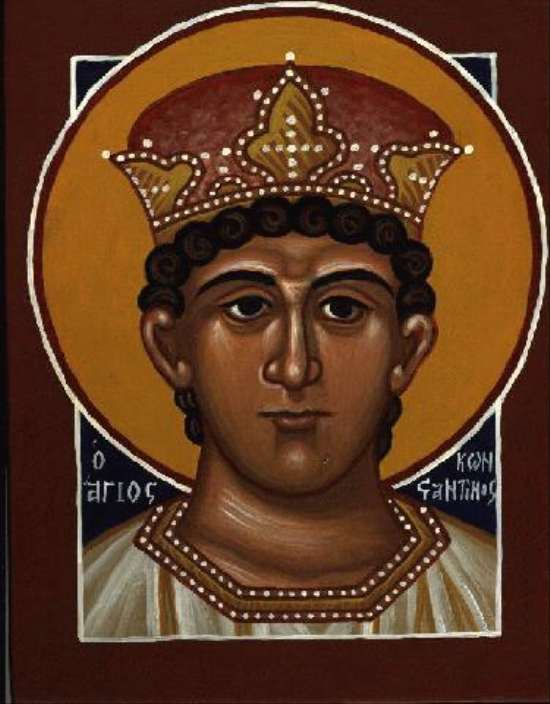
Once again, today, we encounter a familiar gospel story, and that familiarity itself threatens to obscure the deeper meaning of this event in Jesus’s life. We’ve heard “render to Caesar” referred to not only in preaching but in common speech as though the realm of politics and the realm of faith were separate entities, having little to do with each other. This was not the case in Jesus’s day, and it’s equally a misunderstanding today.
We cannot understand Jesus’s response unless we’re acquainted with the context of the question. Although we’re dealing with essentially the same set of antagonists: the chief priests and elders as well as the Pharisees, they’ve slipped quietly into the background. Their questions are no longer about Jesus’s beliefs and understanding of God’s relationship to humankind, as we saw in the parables of the past few weeks; now they’re specifically trying to trap Jesus in a way that would get rid of him once and for all. The chief priests and elders don’t show up this time, and even the Pharisees send their disciples instead. Along with them came the Herodians. Who were they, and why were they there?
Judea came under direct Roman administration in the year 6 AD. The Romans permitted local administrations to continue functioning after their takeover, so long as they remained loyal to Rome. Herod Antipas, the tetrarch of Galilee, like his father, Herod the Great, was Jewish in name and practice only. They were not of Jewish ancestry and were viewed skeptically by the Jewish authorities. Herod was seen, rightfully, as a Roman puppet ruler. When the Romans took over Judea, they imposed a census tax on every adult male. This tax immediately sparked a revolt, in which Judas the Galilean and his followers argued that paying that tax amounted to accepting a master other than God—namely, the emperor. The revolt was crushed, but the argument never died.
As you can see, the challenge to Jesus wasn’t spontaneous nor was it theoretical. The challengers on one side were the disciples of the Pharisees who saw the tax as a shameful badge of Roman occupation, and on the other side were the Herodians who supported Herod Antipas and were loyal to Rome. Both sides expected Jesus to answer in a way that was a betrayal of either his faith and religion or civil authority: thus, either a betrayal of his mission or opposition to the emperor, and treason.
Jesus’s response to the question, which pitted the Law of Moses against the law of Rome, was to call the questioners hypocrites. This wasn’t because of the question itself, but because of the flattery they used to introduce the question. The Greek word “hypocrite” referred to a stage actor—someone saying lines not their own, rehearsed for effect. That pretty well described the empty flattery of their opening lines. Then, Jesus asked to see the coin used to pay the tax, the denarius bearing the image of Tiberius and the inscription proclaiming him as the son of the emperor-god Augustus and most high priest. Of course, they produced the coin. Yet, it happened within the temple precincts where graven images were sacrilegious.
Then Jesus asked the question that formed the pivotal moment of the exchange. “Whose image—whose εικων (eikōn)—is this, and whose inscription?” When they answered him, “Caesar’s,” he told them “… repay to Caesar what belongs to Caesar…” Not, “pay to Caesar” but “repay to Caesar.” Return the coin to its rightful owner. Everyone focuses on that part of Jesus’s statement but misses the second half: “… and to God what belongs to God.” Those standing around listening to that exchange would have immediately thought of Genesis chapter 1 [1:27], “God created mankind in his own image, in the image of God he created them…” What Jesus asked to be returned to God was everything that belonged to God, everything that bore God’s image, all of humanity and all of human experience. It was a declaration of God’s ownership over all creation and a call for all to recognize that ownership, whether it was over the faithful of Israel, or the kingdom and power of Cyrus and the Persians, or the emperor Tiberius and the power and authority of Rome itself. It wasn’t a declaration of the so-called separation of church and state, religion and politics, but a recognition of the primacy and supremacy of God over all things, especially politics.
In a recent interview, Senate candidate James Talarico said the same thing: “The key is, you don’t want to fit the big thing into the small thing, and God is the biggest thing there is. And to fit God into a political party… you’ve got it reversed. And it’s why I think we have to remember to put the big things first; to put the love of God and love of neighbor before anything else… Your politics should grow out of your faith, not the other way around.”
Strange as it might sound coming from me, I would add that putting love of a religion before love of God is also equally backward. All religion is an expression of the human experience of God, meant to draw people beyond itself and into that ineffable first-hand experience of God. When any faith tradition replaces the image of God with its own image, it’s rendering to Caesar what is God’s.
We are all created in the image of God and bear his likeness in the love we offer to God and to one another. Even the Pharisees’ disciples and the Herodians recognized the image of the emperor on the coin. The challenge that Jesus offered to his adversaries and to us is to recognize the greater image that surpasses all others—the image of God—even, and especially, when that human image has faded, been worn down, damaged, distorted, made unrecognizable. For the image of God cannot be recognized by physical sight, but only with the eyes of faith.
Get articles from H. Les Brown delivered to your email inbox