Two Kinds of Fear

Thirty-Third Sunday Scripture Readings
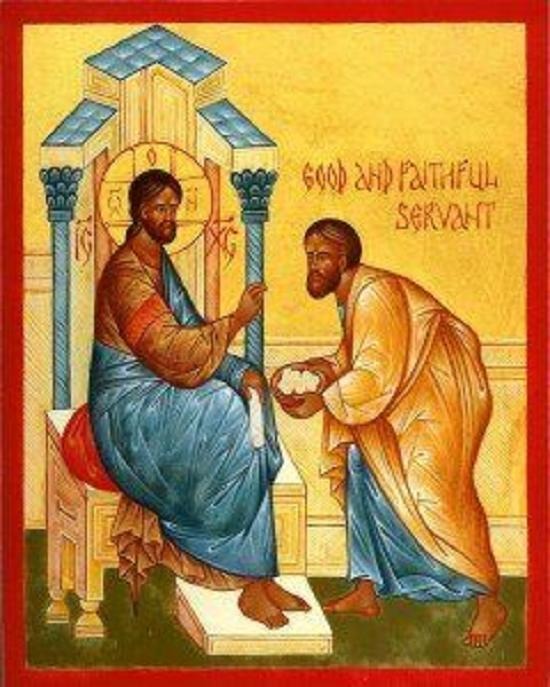
How you behave is an indication of who God is for you. Last week’s gospel showed us five bridesmaids who were φρόνιμοι (phronimoi)—that is, prudent and with foresight. Today’s gospel follows immediately after it but criticizes the servant whom we could identify as φρόνιμος (phronimos), a man with the same prudence and foresight for which the bridesmaids were praised. We need to see why the master condemned the servant who showed prudence and how the same behavior reflects how we see our master, our God.
Let’s see what was going on in today’s gospel. The master was obviously very wealthy. His servants weren’t laborers; they were three men responsible for managing the wealthy master’s property. He felt secure enough with their competency that he was comfortable leaving his wealth in their care and traveling abroad for a long time. Travel at that time was notoriously slow, although people often traveled great distances. He gave each of his servants authority over massive amounts of wealth. How much was a talent in today’s currency? One talent in Israel at that time represented about seventy-five pounds of sterling silver. But its real value was found in its relationship to the denarius. One talent equaled approximately six thousand denarii. One denarius was an average day’s wage for a laborer. In other words, one talent was worth approximately twenty years of work. With a current average daily wage for a laborer of about $170, one talent would represent approximately one million dollars in current value. So, we wouldn’t be far off to say that he gave one servant five million dollars, another one two million, and the third one, one million. This wasn’t the servants’ money. It was given to them to administer, and an accounting would be required upon the owner’s return.
You may remember that last week we talked about two kinds of wisdom: intellectual and practical. This week, we’re presented with two kinds of fear: one is experienced as awe, the other as insecurity. All three servants feared their master. Two of them were in awe of him, but one experienced insecurity. Awe generates industry. Awe of their master pushed the two most gifted servants to do something with what they were given, to put themselves out there, to take risks not only with the wealth under their control but also with personal risks. They feared, all right, but knowing their master as they did, they feared the consequences of doing nothing.
The servant who was given the least saw his master in a different light. He, too, was afraid, but his fear was characterized by self-centered insecurity. Despite what he knew about his master, he was unwilling to put his entrusted wealth or himself at risk. The rabbis at that time counseled the people that, for safekeeping, money should always be buried in the ground. The servant did exactly what he was supposed to do… but nothing more. He did the bare minimum out of insecurity, thinking that he and the money would be safe that way. He thought he could satisfy his master by doing only what was expected. That way, he didn’t have to put himself out or at risk or exert any additional energy.
Yet it’s that additional energy and that extra attention, despite possible consequences, that make all the difference. Look at today’s first reading. Our translation, as often happens, takes the flavor out of the text, leaving it insipid and flat. It starts off by saying, “When one finds a worthy wife.” I can’t help but think to myself, well, then, what’s an unworthy wife? What the Hebrew more correctly says is: “When one finds a woman of valor…” The word is often used to describe warriors, conveying force, might, or valor. It goes on to describe the fruits of her commitment: not only does she create and manage the home, but she also reaches beyond, giving of herself to the poor and needy. She risks herself, her quiet life, for the sake of investing in those who need what she has to offer. “Charm is deceptive and beauty fleeting,” says the text, “the woman who fears the Lord is to be praised.” There it is—the source of her outreach—fear (that is, awe) of the Lord.
Here’s a very painful personal story. My mother had been a very hard-working woman since she was a child. She was the oldest, and my grandmother worked in the mills during the depression. It fell mainly on my mother to care for and, at least partially, raise her two brothers and two sisters. She knew about insecurity; she experienced being among the working poor firsthand. To support herself, she took a job as an actuary in a giant insurance company, moving from her little mill town to a city two states away. There, she met my father and had my younger brother and me. When I was seven, my father started his manufacturing company and, while Dad ran the production side, Mom ran the business. They worked long hours at the factory, and after dinner, Mom often went back to her desk at home long into the night. As a result, my brother and I were what they now call “latchkey kids.”
When I was twenty, I transferred to the University of Florida. She and Dad came with me to the train station in Hartford to say goodbye. Mom’s face was incredibly sad. I asked what was wrong. She said, “You’re leaving for good.” She knew something then that I didn’t. I tried to argue that I’d be back, but she shook her head. “I only regret,” she said, “that I missed you growing up.” That was the saddest thing I ever heard her say, because it was true. You would think that she was a woman of valor for how she gave of herself to make the business a success. She supported her family and supported her children. Yet it might have been less difficult to deal with machinery and numbers than with members of her own family. She lived more in fear of financial failure than in awe of the God who is “with us”—that is, in relationship with us.
When we can set aside our insecurities and our fears of failure, we open ourselves to the God of awe and wonder. Fear of that Lord means risk. It means coloring outside the lines. It means stepping outside our comfort zones and putting ourselves on the line. It may even mean going against the expected thing, the sensible thing, the “right” thing. Most times, awe and fear of the Lord rather than fear of consequences leave us with feet firmly planted in mid-air. Playing it safe yields only weeping and gnashing of teeth. Yet taking that step into the unknown can produce incredible results. “Enter into the joy of your master.”
Get articles from H. Les Brown delivered to your email inbox