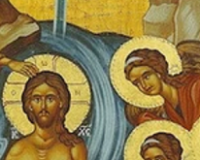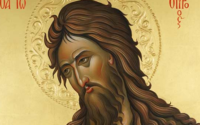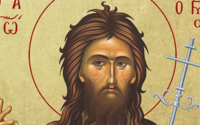
Third Sunday Scripture Readings We’re seeing something here in today’s Gospel passage that we need to keep in the back of our minds throughout this coming liturgical year. We’re following the Gospel of Matthew, and Matthew was an observant Jew who accepted Jesus as their Messiah and wrote Jesus’s story for observant Jews. For the Jewish faithful at that time, not only was pronouncing God’s proper name, Yahweh, forbidden, but also learned Jews refused even to use the generic term, “God.” Instead, they replaced it with terms such as “the Name” or, as in Matthew’s case, “heaven.” We’ve often seen that the term “kingdom” doesn’t refer to a physical place but instead to God’s reigning in power and glory over his creation. Therefore, where Matthew reports that Jesus preached, “The kingdom of heaven is at hand,” we should translate that to: “the reign of God” is at hand. That, in turn, meant that the reign of God was dawning–it was already here, but not in its fullness. The dawning of the reign of God created a certain atmosphere of anticipation and anxiety. For those who could see it, there was an awareness that there was still time. The prophets had preached about the “Day of Yahweh,” a day of wrath and terror, and the Jewish people took that quite literally. It would be a day when all of God’s creation would be upset, and all that was hidden would be revealed. Into this mix would step the Messiah, the central figure in this coming apocalypse. The one who not only played up this belief and understanding but fostered it was John the Baptist. It was he who first preached the need for a radical change of mind and heart because “the kingdom of heaven is at hand.” It was much more than, “God’s coming, look busy.” It implies that everything was changing, so don’t get left behind. Jesus’s message, then, was not new. The Baptist had already aroused the people. They were more than ready for a change. When they flocked to John the Baptist, all they wanted to know was what they needed to do to be prepared for it. They had no doubt it was coming; they could see the signs. John had created such a popular movement that he came to the attention of King Herod. And John had publicly called Herod out for marrying his late brother’s wife. In Jewish circles, Herod was unpopular, so that made John’s message that much more appealing. John put the “meta” in metanoia. When today’s gospel story opens, John has already been arrested and put into prison. The authorities had effectively silenced him and dispersed the crowds, but they couldn’t squelch the excitement that John had aroused. It was a movement looking for a mover. Into this environment stepped Jesus and, according to Matthew, he took up John’s message. The sense that it was all in the process of coming down not only drew people to Jesus—who preached the same message—it drove them to him. And he moved from his little hometown of Nazareth to the much bigger town of Capernaum because that region along the west bank of the Sea of Galilee was where the people were. All of this goes a long way toward explaining people’s attraction to Jesus and their reactions to him. He stepped into a ready-made audience who were hungry for his message. Jesus walked along the shore of the Sea of Galilee and saw two sets of fishermen: Simon and Andrew, and James and John. Do you think Jesus was walking alone? He was evidently already attracting a lot of notice. And John the Evangelist tells us that Andrew and John had been disciples of John the Baptist before he was arrested. Was this a random selection on Jesus’s part? I hardly think so. These men were already committed to the movement before Jesus assumed leadership, and they must surely have been publicly recognized as John’s disciples. When Jesus invited them to resume their positions in what must have been, for them, the most important cause in their lives, there was no hesitation. It was not much of a miracle, given how they followed the urgings of their hearts. And besides, Jesus must have known who he was dealing with. Was he acquainted with them, and did he watch them carefully while they had positions among the disciples of the Baptist? How could he not? It wasn’t random that these four men were chosen first, and it wasn’t random that these four, Peter and Andrew, James and John, quickly became the “super-disciples,” the ones whom Jesus trusted the most and to whom he opened most fully his heart. Yet being a disciple of Jesus was not the same as discipleship under John the Baptist. Whereas John pretty much stayed put, preaching and baptizing in one spot, relying on crowds of like-minded people to seek him out, Jesus’s ministry was very different. He went around from city to city and synagogue to synagogue, preaching to the half-hearted, the wishy-washy. He performed prophetic signs, such as healing the sick, to win their attention so they would pay attention to his message. In this, Jesus went beyond John the Baptist, who preached metanoia as a change of heart, turning away from the misdeeds of the past and being baptized to symbolize that conversion. Jesus wasn’t so concerned with what people were turning away from as with what their metanoia would turn them toward. The message of Jesus is still the same today as it was then. The reign of God is still dawning, even though the Day of Yahweh has come and gone in the death and resurrection of Christ. The good news of the kingdom is still with us—the news that, in us who have heard and believed, the kingdom is εν υμιν (en humin), among and within us. We are a part of that victorious reign of God that banishes fear if the preaching […]