
To Fulfill the Law

Sixth Sunday Scripture Readings
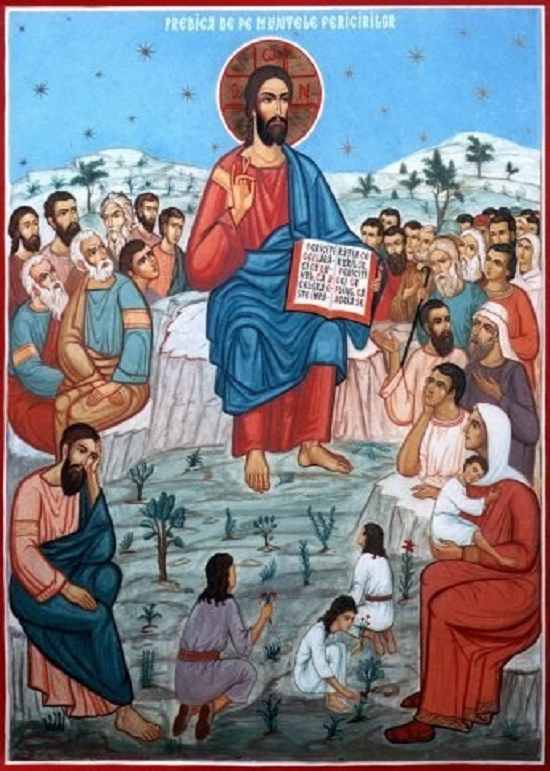
Today’s liturgy continues Matthew’s overview of Jesus’s Sermon on the Mount. We might call it the Sermon Part III. We started out two weeks ago with the Beatitudes… the Christian Manifesto. It spelled out for us the essential characteristics of the follower of Jesus into the Reign of God. Then, last week, we were presented with the images of salt and light, spelling out for us the role of a disciple in the world and the cost of failure to persevere in our accepted role. Now, in today’s gospel, we’re confronted with the radicalness of Jesus’ message. It’s very easy for us to criticize the religious people of Jesus’ day the way he himself did, but we have to be reminded that when we point the finger at another, there are three others pointing back at us. I don’t know about you, but I grew up in a world that valued external observance—attending Mass on Sundays and Holy Days of Obligation and observing the Ten Commandments.
As a priest, when I used to hear people’s confessions, the majority of them were formatted according to the traditional “laundry list.” “I committed these sins: I did such-and-such so many times. I am sorry for these sins and all the sins of my past life.” Like the Jewish authorities of old, our teachers instructed us in obedience and conformity to the law, and in avoiding its transgressions. The focus was always on sin and on avoiding it or repenting from it. And, when you listen to people speak about morality—especially religious people—isn’t that what you hear? Be good. Do what you’re told. Don’t be evil. On the mountain, Jesus, the new Moses, the new lawgiver, takes the Torah and tears it open.
Doesn’t Jesus’s discourse today make you feel uncomfortable? He’s taking the basic commands of the Torah and asking his followers to take them to another level. Some would even say an impossibly high level. Who can be saved if that’s the standard we’re to hold ourselves and others up to? It’s no wonder that people look at Christian morality as Jesus preached it as a set of unrealistically high ideals. Is this what Jesus means when he says that he has come to “fulfill” the law? And, furthermore, was he even being honest when he told his followers that he didn’t come to abolish the law, but to fulfill it? After all, Jewish Christians quickly left behind them most of the practices that the rabbis had spent whole lifetimes teaching and practicing. What’s up with that?
You’re right when you say it doesn’t make sense, but the fault doesn’t lie with Jesus; it lies with us. He’s showing his followers the keys to the kingdom of heaven, but they can’t see it… and neither can we. Our problem is that we’re looking at Jesus’s moral statements through the eyes of the scribes and Pharisees. The attitude of the scribes and Pharisees is this: what do I have to do to avoid the penalties of the moral law and, at the same time, how can I get away with as much as I want without breaking the law and receiving punishment? When we look at Jesus’s sayings through that lens, it’s evident that he’s reduced the moral wiggle room of the law immensely and made the whole burdensome system that much more burdensome by doing away with casuistry.
And that, my dear friends, is the whole point. The law exists at the level of behavior and punishes bad behavior with more bad behavior. Jesus’s approach doesn’t raise standards of behavior to a higher level; he lowers them. He takes them down from the head to the heart. He rips open the Torah and exposes the spiritual underpinnings that the law was supposed to lead people to before it became an end unto itself. How, then, does Jesus fulfill the law? By exposing its foundations in a fundamental orientation of the person toward honor and respect for one another, seeing one another as we hope God sees us, treating all relationships as sacred—so sacred that Jesus tells us to leave our gift at the altar and go reconcile before we come back to God—holding the truth and one’s word inviolable. You can’t encompass these human values in a set of rules and regulations to determine right from wrong. Yet they are what the whole Sermon on the Mount is all about. And this is what it means to fulfill the law.
You know that I use the term “metanoia” often in my homilies. You know that it’s traditionally translated as “repentance.” If you consider it from an old Law perspective, it’s feeling sorry for and turning away from evil deeds, bad behavior, and bad attitudes. But we always translate it “a change of mind and heart,” don’t we? Metanoia, as a change of mind and heart, is not a change of behavior. That’s not the key to the kingdom and reign of God. It’s a change of interior disposition, a change of perspective, a change of attitude. With that change of attitude that Jesus preached here comes respect for others, no matter their status, no matter their mental or physical state, no matter their origins. It’s the respect for the sacredness of the person that matters to Jesus and permeates the reign of God. It’s also the sense of personal integrity where you tell the truth and honor your commitments without hesitation or excuse and to the best of your ability.
My friends, you don’t need me to tell you who in our world are the true followers of Christ—the true Christians—and who are impostors. When someone tells you who they are, believe them. The signs of metanoia, as we heard last week, are evident. Who are the salt of the earth? Who are the light of the world? And we don’t need to punish them or hope or pray that God will punish them for their hurtful words and deeds. God does not need to exclude them from his reign or lock them out of his kingdom. They are people who have refused to enter the kingdom to begin with. Heaven would be hell to a godless person, just like sobriety would be intolerable to an addict or alcoholic. It’s sad, yes. But not even God can force someone to change their mind and heart. It has to come from the inside.
So now you know. Now you know what metanoia entails and how awesome is the reign of God. You don’t have to take my word for it. Jesus has already said it: “Unless your righteousness”—your change of mind and heart—”surpasses that of the scribes and Pharisees, you will not enter the kingdom of heaven.”
Get articles from H. Les Brown delivered to your email inbox