Antidote to Fear

Twelfth Sunday in Ordinary Time Scripture Readings
Haven’t we all, at some time, had the thought that we don’t know how we could get through it if some particular thing ever happens? I could be the death of a best friend, the death of a sibling, the death of a parent, or the death of a child. And then it happens. It’s easy to feel abandoned, especially when the one we counted on to help carry us through is the one who is gone. And we know what it feels like when the kindness of those around us just isn’t enough, and somehow we discover just enough strength deep down inside to make it through. It’s a unique kind of isolation when it’s all we can do to take the next step and do the next right thing. It’s those kinds of moments, when we feel most helpless and alone, that Jesus is addressing in today’s gospel reading.
Last week, we were called by name, given authority, and sent to carry Christ’s love and compassion to those most in need of it. We’ve heard the call, but we hesitate. What if they don’t want our love and compassion? Or, even worse, what if we do it wrong? Who’ll help and guide us along the dangerous pathways of caring for others? What if we haven’t got enough love to give? What if we’re not enough? Aren’t these the same sorts of fears we’ve had all along—the fear of standing there powerless before life, naked and alone?
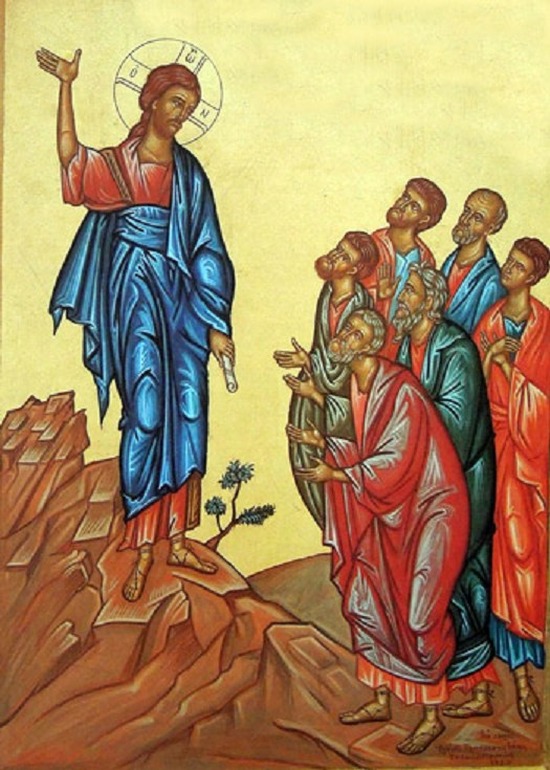
“Jesus said to the Twelve, ‘Fear no one.’” This wasn’t his assurance that they were immune to harm or pain; neither were they immune to mistakes or wrongdoing. Nor was he telling them they’d be well received and that everything would work out fine. He wasn’t offering them security. On the contrary, he was counseling them to find courage even in the midst of “terror on every side” as we read in the Prophet Jeremiah. That courage is based on a conviction that I fear Christians don’t take seriously enough. Our faith, our trust to get us through, is grounded in a conviction that God is with us—Immanuel.
The incarnation is a radical understanding that transforms our understanding of both God and ourselves. Look at the image Jesus presents us with: “Are not two sparrows sold for a small coin? Yet not one of them falls to the ground without your Father.” The word “knowledge” is not in the original text but was added to make sense in English. However, it blunts the force of the saying. It suggests that the Father watches the sparrow fall from a distance. But that’s not the case. The death of the sparrow involves the Father. The Word of the Father suffered and died on the cross, and his Holy Spirit is one with our sufferings as well. We are never truly alone, never wholly isolated, never entirely on our own. God is with us through it all, regardless of what it may be.
So, when Jesus tells the Twelve, “Do not be afraid,” he isn’t suggesting that the road ahead will miraculously open up and be easy. On the contrary. He warns them—and us—that the road ahead will often be challenging, difficult, and seemingly impossible. Yet, through it all, we need go through none of it alone. Nothing happens to us without our Father, who is intimately acquainted with every hair on our heads, every cell of our bodies, every thought in our minds.
In any difficulty, all that’s necessary to unlock the presence and power of God’s Spirit to get us through is to trust. That’s all. It’s that simple. That’s what faith is all about. That’s what Jesus meant by acknowledging him. It’s the recognition that, like Jesus, we’re not in this all alone. The love of the Father dwells in us no less than it dwelt in him. But if we fail to recognize the presence of the Spirit within us and fail to trust in God’s power indwelling who we are, God will be powerless to help and support us. He’s left it up to us. Acknowledge and trust, and be not afraid, or ignore his presence and face what life confronts us with on our own. The choice is ours.
Get articles from H. Les Brown delivered to your email inbox