Meek and Humble of Heart

Fourteenth Sunday in Ordinary Time Scripture Readings
# [Fourteenth Sunday Scripture Readings](https://bible.usccb.org/bible/readings/070526.cfm)
Why am I so interested in taking you back to the original languages? Why can’t we just be satisfied to listen to a nice meditation on the English text as we find it read to us at every liturgy? The answer to these questions lies at the heart of what Scriptural texts are meant to accomplish. All language exists for the sole purpose of connecting one human being’s experience with another’s. We call that connection “meaning”, and the content of that meaning is lived experience. For the Scriptures, that lived experience is an encounter with God. It’s far more than just a transfer of knowledge. In fact, our knowledge of God is so rudimentary and distorted as to be useless. What we seek in our appreciation of the Scriptures is nothing less than an encounter with God himself. So, the closer we can come to the authors’ mentality, the closer our connection to their experience becomes, and the more authentic our encounter with God becomes.
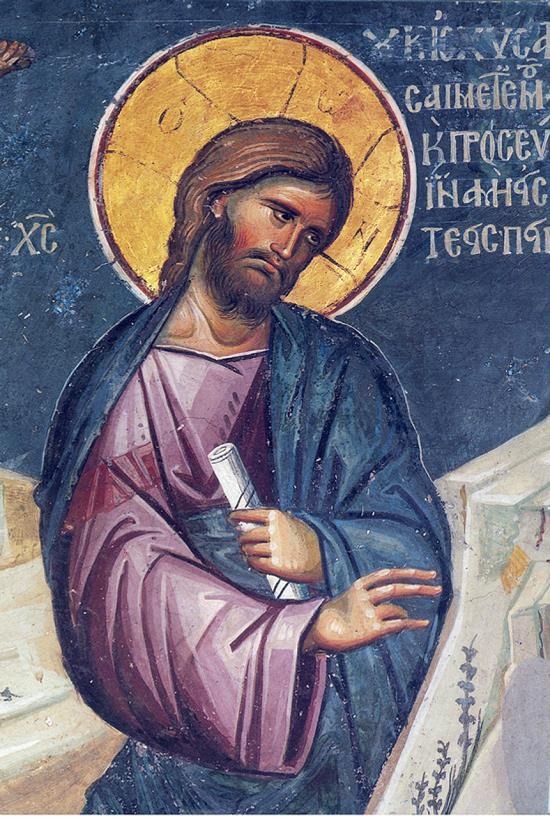
That’s what’s going on in our Scripture readings this morning. What the gospel passage seems to be telling us is that Jesus saw himself as meek and humble—a sort of idealized little child—who expected his followers to model themselves on him. It’s the image we see so often in children’s Bible books: the Jesus who spends his time petting lambs and hugging kids. The meek might, after all, inherit the earth, but, until then, it’s not a very attractive model for us adults. Is it any wonder that people who struggle with adult challenges find little encouragement in Caspar Milquetoast Christianity? When meekness is seen as the model for the Christian, I’m tempted to quote Inigo Montoya in The Princess Bride, who said, “I don’t think that word means what you think it means.” This is the same Jesus who drove the moneychangers from the temple and who told Peter that he could summon twelve legions of angels… but he didn’t.
Let’s look at the background of that one word, “meek”, because it’s the key to unlocking the entire radical worldview that we find in all three of today’s readings, and it’s a worldview in total opposition to the cultural environment where we find ourselves these days. The Greek word that’s used when Jesus says, “I am meek and humble of heart,” is πραΰς (praus). It’s the adjective they used to describe a tamed horse. Consider that for a moment. A tamed horse isn’t weak by any means. Rather, its strength is controlled and directed. Its power is turned away from fighting to secure or defend itself. The image is enhanced by its use in the Prophet Zechariah. “See, your king shall come to you; a just savior is he, meek, and riding on an ass…” The Hebrew word that the Prophet uses is עני (‘ani), and this isn’t only the passage that the four evangelists quote when describing Jesus’s entry into Jerusalem on Palm Sunday, but it’s the passage that Jesus himself chose to exemplify and make it clear to the crowds who he was and why he came. Here’s the point of the passage: the king isn’t powerless; indeed, he’s described as the people’s savior. Yet he appears riding on an ass rather than on a warhorse or a chariot. He comes with a power unlike political or military strength. It’s a power that does not act to secure or defend the self. When this passage is quoted in the gospels, that same Greek word for meek, πραΰς (praus), is used. So, when Jesus speaks of the meek inheriting the earth and calls himself meek, and asks his disciples to learn from him, that is what he means.
This whole gospel passage does nothing but expound on the concept of meekness as strength turned away from self-promotion. Take Jesus’s opening prayer, where he says, in effect, I acknowledge with gratitude, Father, that what you have hidden from the clever and the understanding, you have revealed to little ones. Only the “little ones” in Greek are the νήπιοι (nēpioi)—infants. Not toddlers or preschoolers, but infants who cannot do anything for themselves. They are the powerless—akin to what the Hebrew Bible calls the anawim—the עָנִי (‘ani)—those who are utterly dependent, non-productive, not pulling their own weight. These are the very ones that the rich and powerful consider to be a burden and unworthy of help. These are the ones to whom the Father reveals the mysteries of the Kingdom, and not the successful and self-sufficient.
The final image I want to focus on in today’s gospel passage is Jesus’s saying, “…my yoke is easy and my burden light.” People may think that means being a follower of Christ isn’t difficult, nor burdensome. However, that’s not what he’s saying at all. “My yoke is easy.” A yoke goes across the necks of two oxen, not just one. The only reason that plowing with a yoke of oxen is possible is that there are two of them. And it only works if the yoke rests easily on both their shoulders. Jesus is telling his disciples that the only way they can live a life of meekness, not counting on their own intellectual, physical, military, or even spiritual self-sufficiency, is if they are willing to share the burden with Jesus and, if with Jesus, then with the Father. For the rest that Jesus promises isn’t a rest from toil, but a rest from the constant fight of the untamed soul. This whole passage has but one message, which is ultimately the Christian message: let go; trust God.
We haven’t spoken this morning about today’s second reading from Paul’s letter to the Romans, where he says, “You are not in the flesh; on the contrary, you are in the spirit.” Is it hard to believe that here we have the exact same message, only in different terms? What does it mean when Paul says that you are not “in the flesh”? Once again, I don’t think that word means what you think it means. It has nothing to do with bodies or even less to do with sexuality. Flesh, for St. Paul, denotes the human being oriented toward self-securing existence, apart from the Spirit of God, who empowers and indwells the person. Flesh, in this context, is the untamed ego, the opposite of meekness and trust in God.
Today’s liturgy, from beginning to end, is a radical countercultural meditation that stands in complete opposition to the forces of militarism, oppression, abuse, and self-aggrandizement we see permeating our world. We have a long way to go as a society to live up to the Christian ideal. But it’s always been this way, regardless of how often people claim the title of “Christian society” or “Christian nation”. As has been said before, on a human scale, Christianity as we see it in today’s readings hasn’t failed. It’s just never really been tried.
Get articles from H. Les Brown delivered to your email inbox